Why pupils at a South London school are taking action to defend their classrooms from overheating
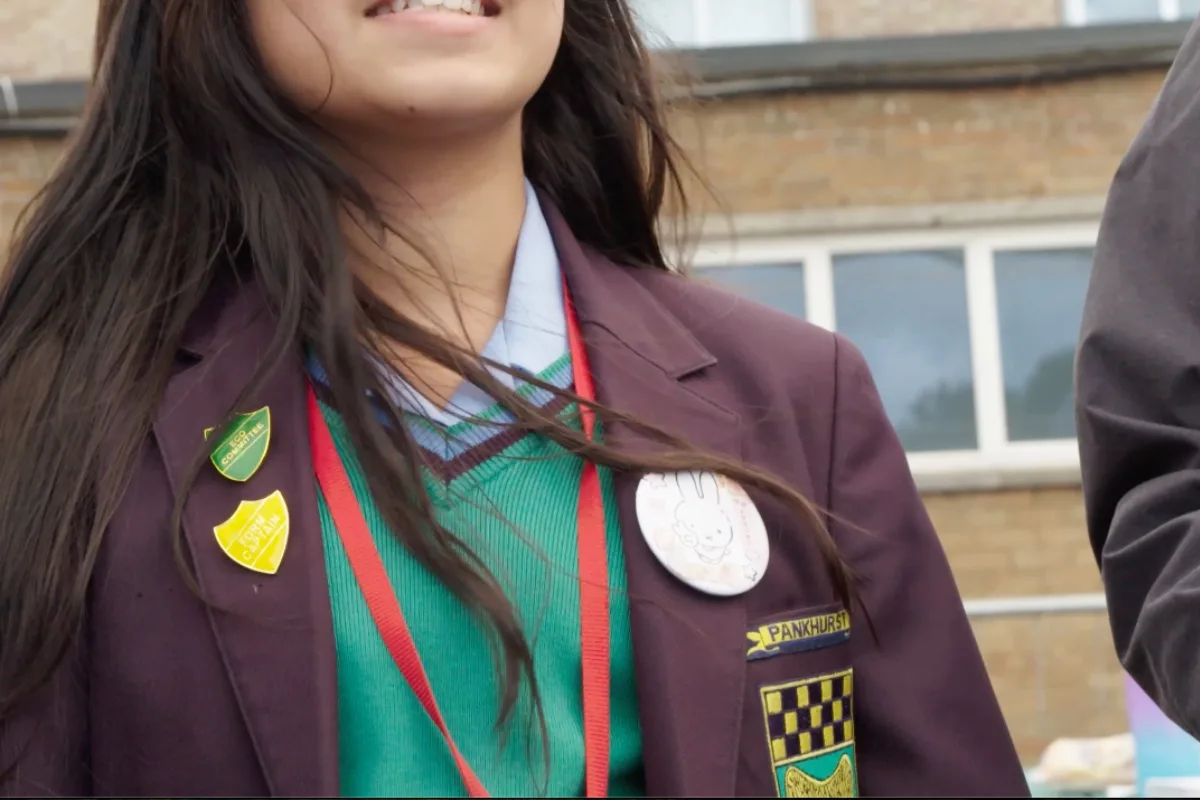
Parts of Wallington Girls’ School get hot!
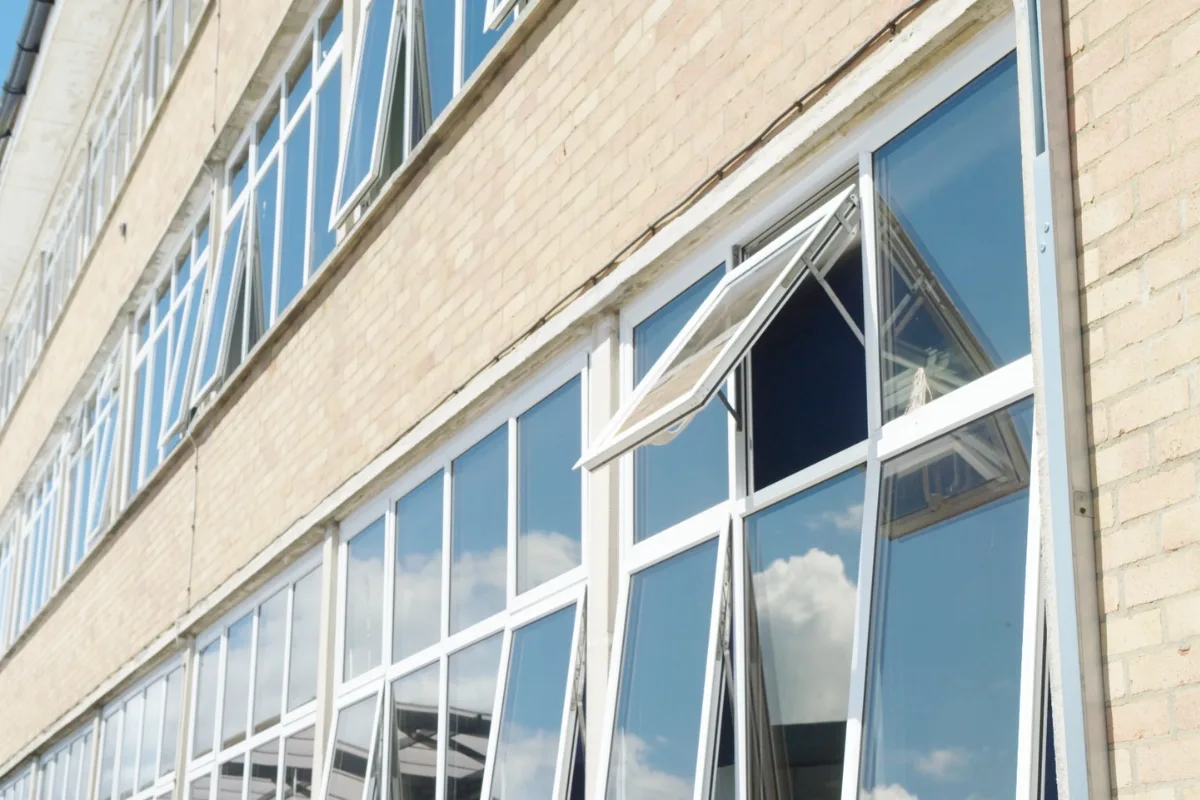
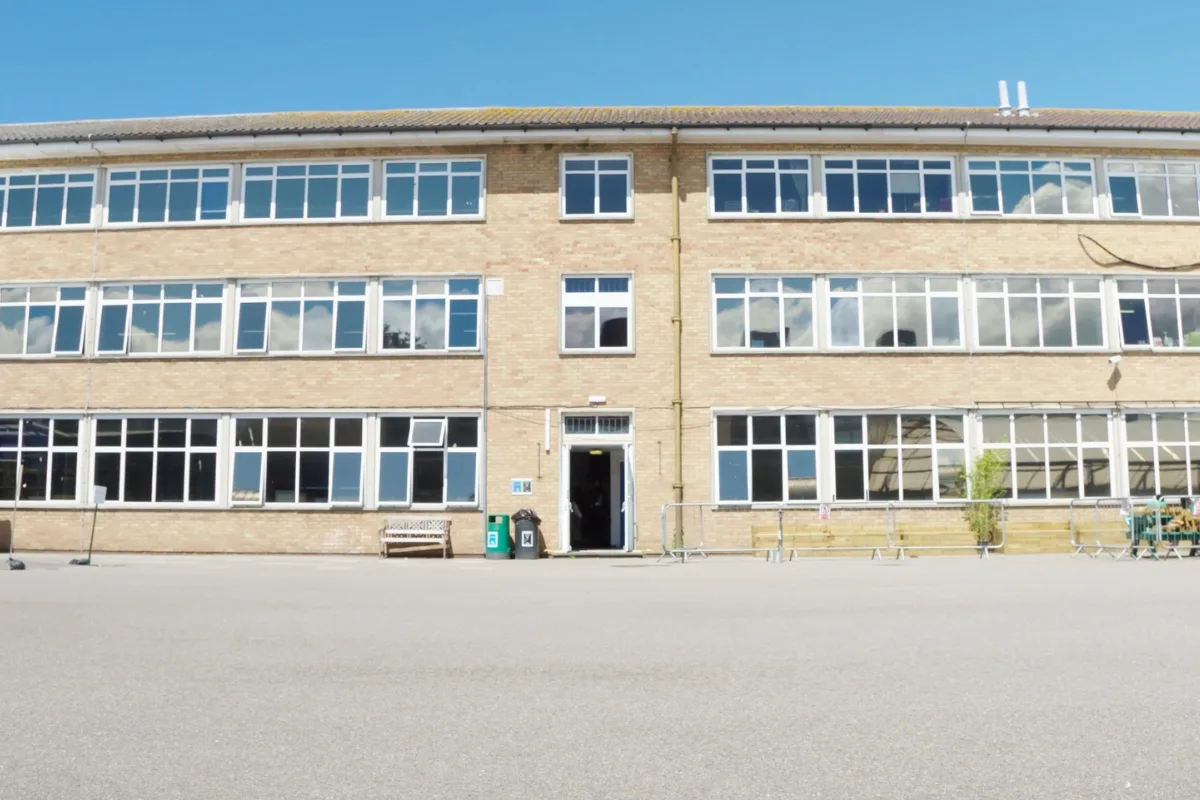
Their original building is set around a tarmac quad, with large windows through to the classrooms. The summer heat makes teaching unbearable. They’ve tried putting dark film on the windows, getting blinds, buying fans, even installing a large metal screen, but nothing has made a big difference. The metal screen even made it worse by restricting how wide the windows could open.
Summers are getting hotter as the climate changes, and London boroughs are particularly at risk of overheating due to the urban ‘heat island’ impact as dense human activities create extra warmth. It’s a significant and worsening issue for Wallington’s teaching.
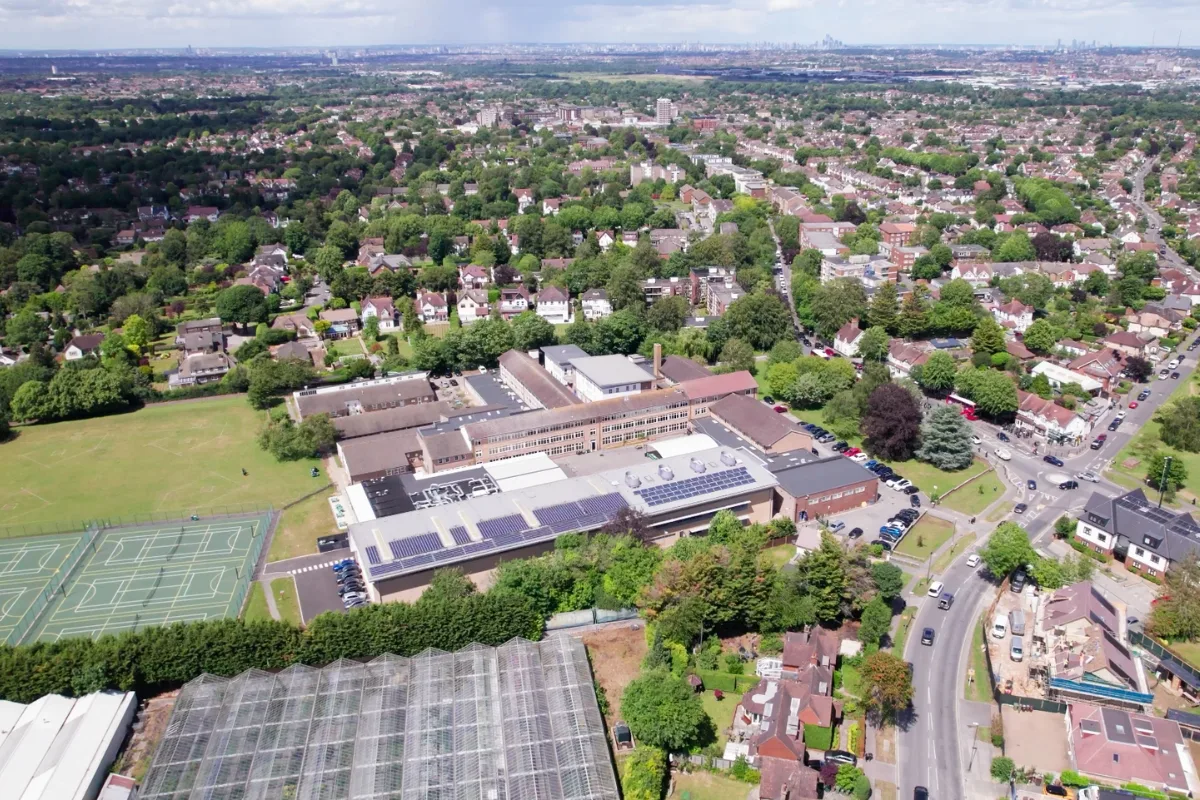
“The school is a real hodgepodge of buildings that clearly didn’t have any defined strategic plan when it was built,” says Headteacher Tracey O’Brien.
Some of the corridors are very narrow, so you’ve got 1,550 students walking down a corridor. It gets very hot.
“Some of the buildings really suffer from heat, especially some of the older sort of 70s and 80s buildings. Whoever designed them has put south-facing windows the entire length of some of the rooms, especially the science rooms. We’re expecting our students to put on lab coats, to put on goggles, to put on Bunsen burners, in a very hot room already.
“It’d be really expensive to retrofit those rooms, running into millions of pounds. Some of the corridors are very narrow, so you’ve got 1,550 students walking down a corridor. It gets very hot.”
Heat is a problem for schools
In parts of the UK, heat has been a regular summer problem for several years. But the multiple and ongoing heatwaves of summer 2026 have brought new attention, with widespread school closures and lost learning. The responsibility of schools to keep their children and employees safe has been forefront.
And heat makes a measurable difference to learning. You are 10% less likely to pass an exam taken in 32° C than 22° C. The Climate Change Committee estimate that by 2050 there will be 70% more days that exceed 34°C indoors, in 20,000 English schools. Currently 6.7 days of learning are lost to pupils per year as a result of heat.
What are Wallington doing to tackle overheating?
Wallington installed a big sun shade for relief during break times, and have made sure that they are benefitting from the sun thanks to 42 solar panels. But heat remains a problem.
“The quad outside is a huge sun trap. There’s no greenery at all, it’s just an open pit of concrete, which reflects the heat really badly. The space is very unattractive. The students don’t use it. There’s nothing to do there.”
Lessons in temperature
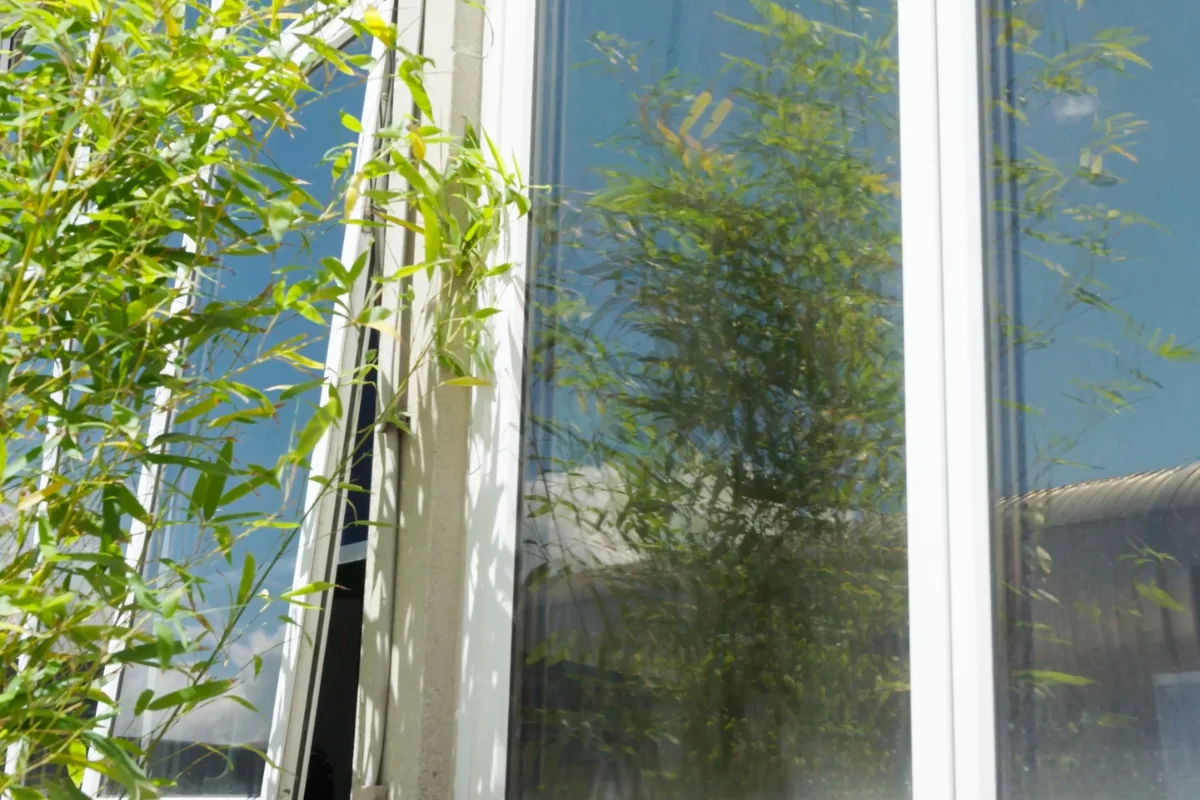
Tracey O’Brien: “We decided to put some benches in, so having somewhere to sit down was really nice. And then we did some research about benches with planters at the back. I know that bamboo is fast-growing, so some of the students were like ‘Can we get loads of bamboo in there? Because it’ll grow really fast. It’ll bring some greenery into the building. We’ll feel like we’re a bit more at one with nature.’
“Even at worst, if it does nothing to reduce the temperature in the building I think it will just make it feel better, with the sound of the wind going through the leaves. The dappled light coming into the classroom. So it might just give the sense of it being a bit cooler.”
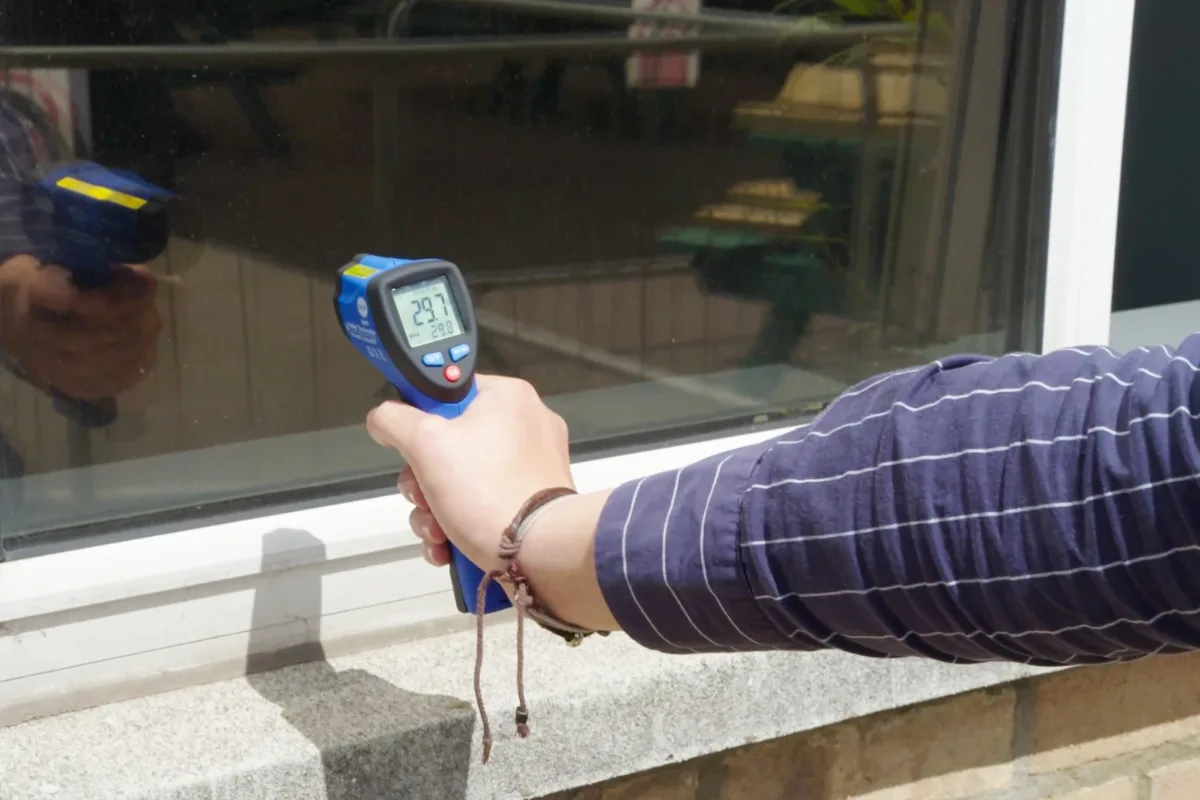
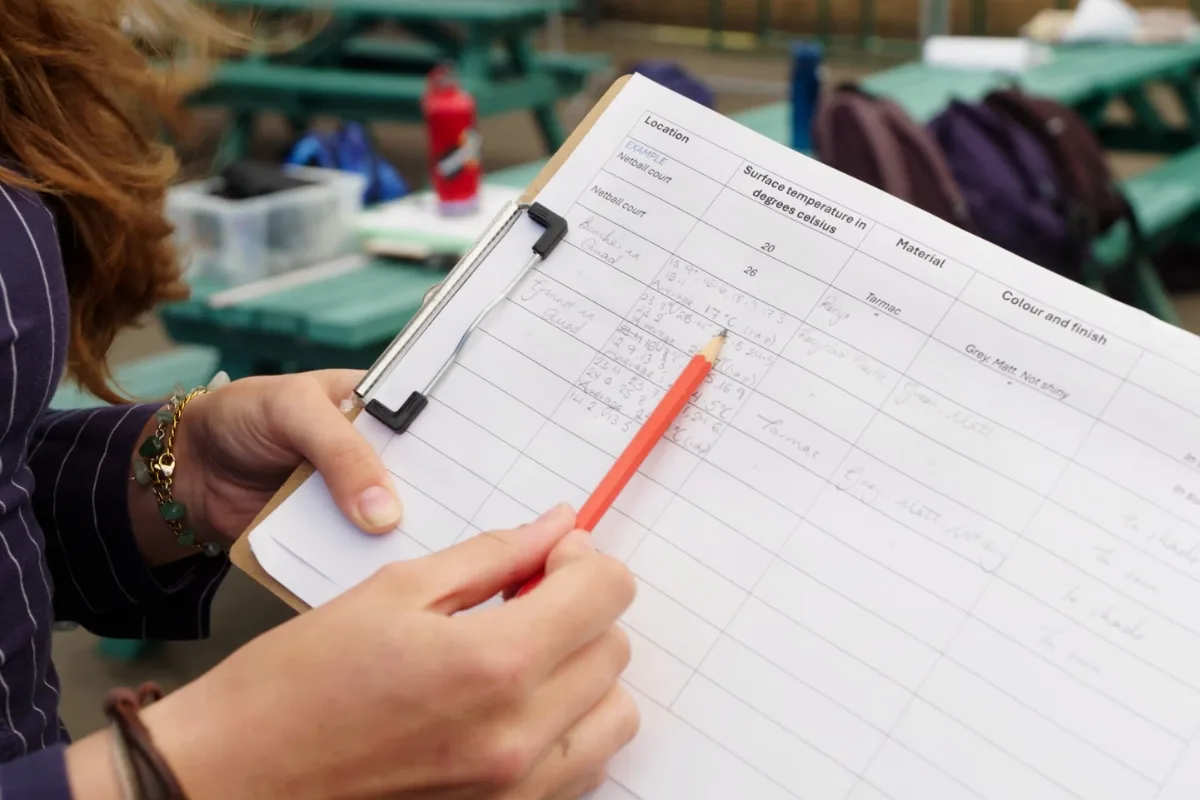
The school designed and ordered wooden bamboo planters. Cindy set the girls to recording temperatures across the school site, bringing the findings back to compare and predict outcomes of adaptations.
They went off to calculate the carbon in different trees on site and discussed the co-benefits of the bamboo – that it creates space for birds and insects, enjoyment for the people, and more carbon-storage on site.
 |
 |
|---|
Making changes
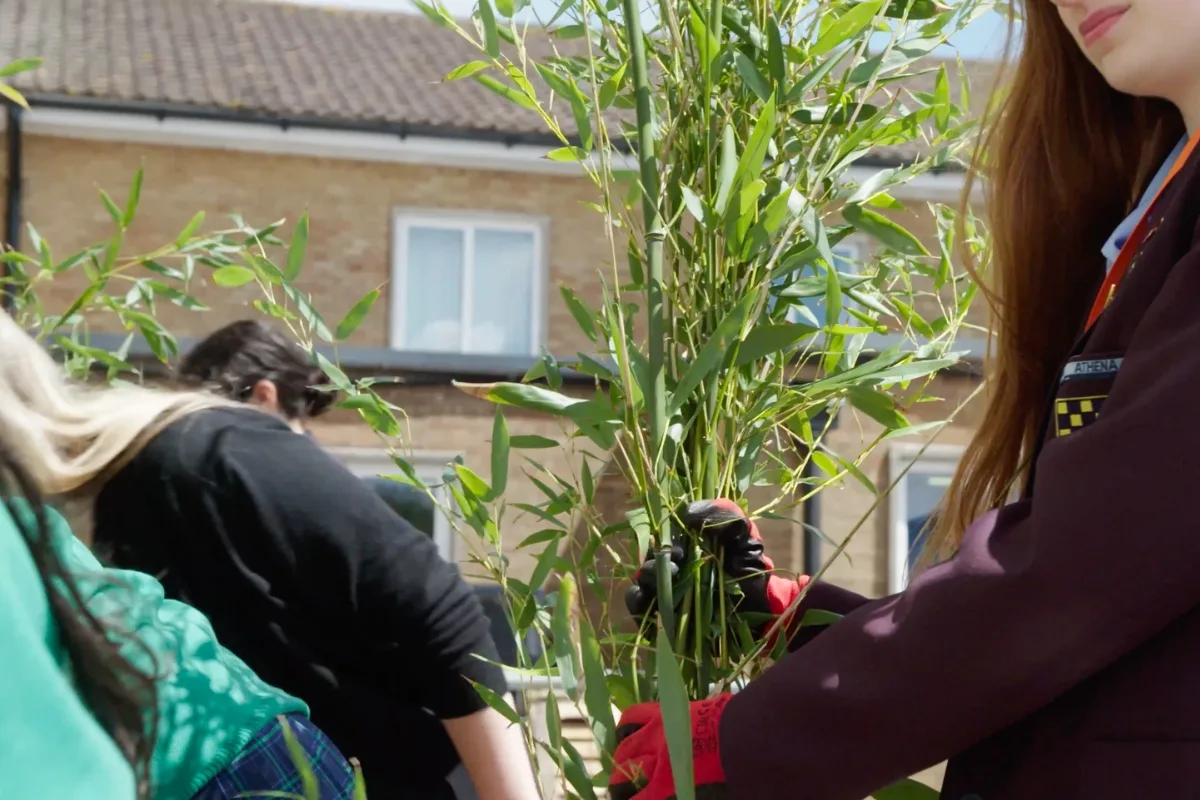
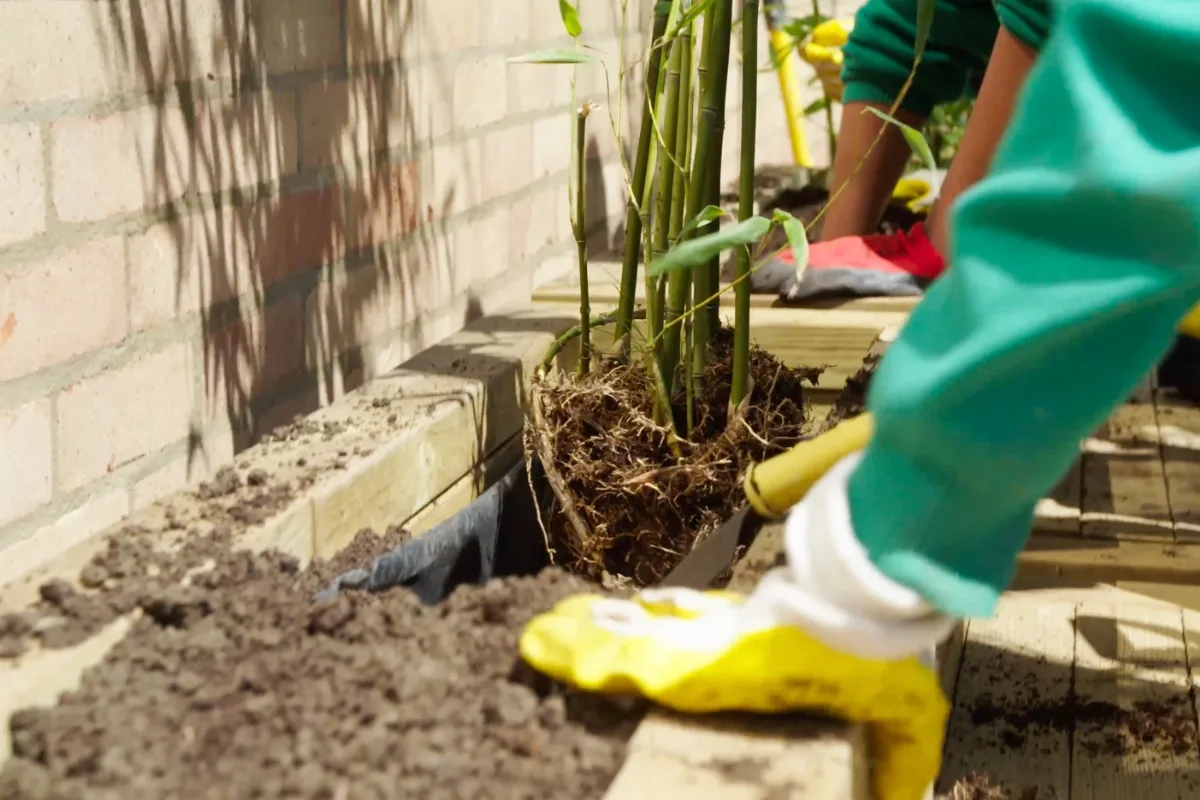
They then all got involved with planting the tall bamboo plants. These will quickly get bushier, but even whilst still spindly, and on the not-particularly-hot day of planting, it was clear how much cooler it was in their shade.
As they were planting LtL’s Cindy Grant said “We were thinking about how long it will be before the bamboo is of any benefit, and we’ve just taken the temperature of the shadow cast by the one plant just placed next to the wall. The difference between that and the full sun was seven degrees.
“So I think this shows that the bamboo is going to start making an impact straight away. As it thickens up it’s going to create quite an impenetrable shade barrier, which will make a real difference to indoors. I think they will be able to feel the difference. ”
“It’s quite surprising how much shade just one plant has made today, and that they can actually make a difference by getting stuck in with their hands in the soil. And they’ve enjoyed it, which is very important.”
 |
 |
|---|
“There’s a wave of students who are interested in climate change and sustainability,” said Tracey O’Brien. “We’ve got environmental prefects who are really taking this issue by its horns and doing lots of public-facing events.”
It’s quite difficult not to be pessimistic.
“As a geography teacher, it is quite hard to teach about climate change; it’s difficult not to be pessimistic. At A-Level we do a lot of work on geopolitics, so that can be depressing, and you don’t want to initiate climate change anxiety amongst young people.”
“You want them to be empowered, so that whatever roles they go into in the world of industry they will be informed. Teaching constantly that people aren’t doing anything about it is quite depressing for myself, never mind the students.
There are fantastic people around the world doing small things, big things, and sharing that idea that change is possible.
“So we have to marry up something around collective responsibility. We try and put in some really positive case studies because there are fantastic people around the world doing small things, big things, and sharing the idea that change is possible.
“And we link in other things, about energy, about sustainability locally, what they can do nationally, what a country might be able to do, and getting them interested in politics so that they have some sort of decision-making and agency in what happens next.”
Thanks to the eco committee at Wallington Girls’ School, Headteacher Tracey O’Brien, Sustainability Lead Jess Henderson, and LtL Delivery Officer Cindy Grant.
Ways to get involved
- We visited schools all over the UK to see the full range of climate challenges they were adapting to. Read the other case studies from schools dealing with high winds, flooding, poor air quality, and biodiversity loss.
- Our Climate School 180 project has been adapted to be a self-directed course for teachers. Sign up to our newsletter to hear when the courses are launched.
- You can also use our school grounds climate audit app on its own.
- Wallington was one of our Climate School 180 schools supported by the University of Stirling, who evaluated the process and brought collaborative inquiry and reflection. A deep dive into the thinking behind teaching climate change in this way can be found in the Climate School 180 evaluation report.


Related News
Teaching climate change through making adaptations to school grounds


The Scottish island children planting trees to create a sheltered place to play