
Ten years of giving our Local School Nature Grants
We’ve given £2.5 million worth of equipment to 4500 schools through LSNG, plus more than 14,000 hours of training! Join us in our celebrations this year. Kirsty Waterhouse tells us more.
Hannah Engelkamp So, Kirsty. Thank you very much for telling me about LSNG. So we are in the 10th year of Local School Nature Grants?
Kirsty Waterhouse That is correct, yeah, 10 years.
H: That is in itself a triumph. What’s your role?
K: I am the project manager, have been for the past six and a bit, nearly seven years.
H: And how many LSNG schools have there been?
K: Altogether somewhere in the region of 4,500ish, give or take. Around 10% of all the schools in England, Scotland and Wales have received the LSNG award so far.
H: That’s incredible. And still going. And so what is an LSNG award?
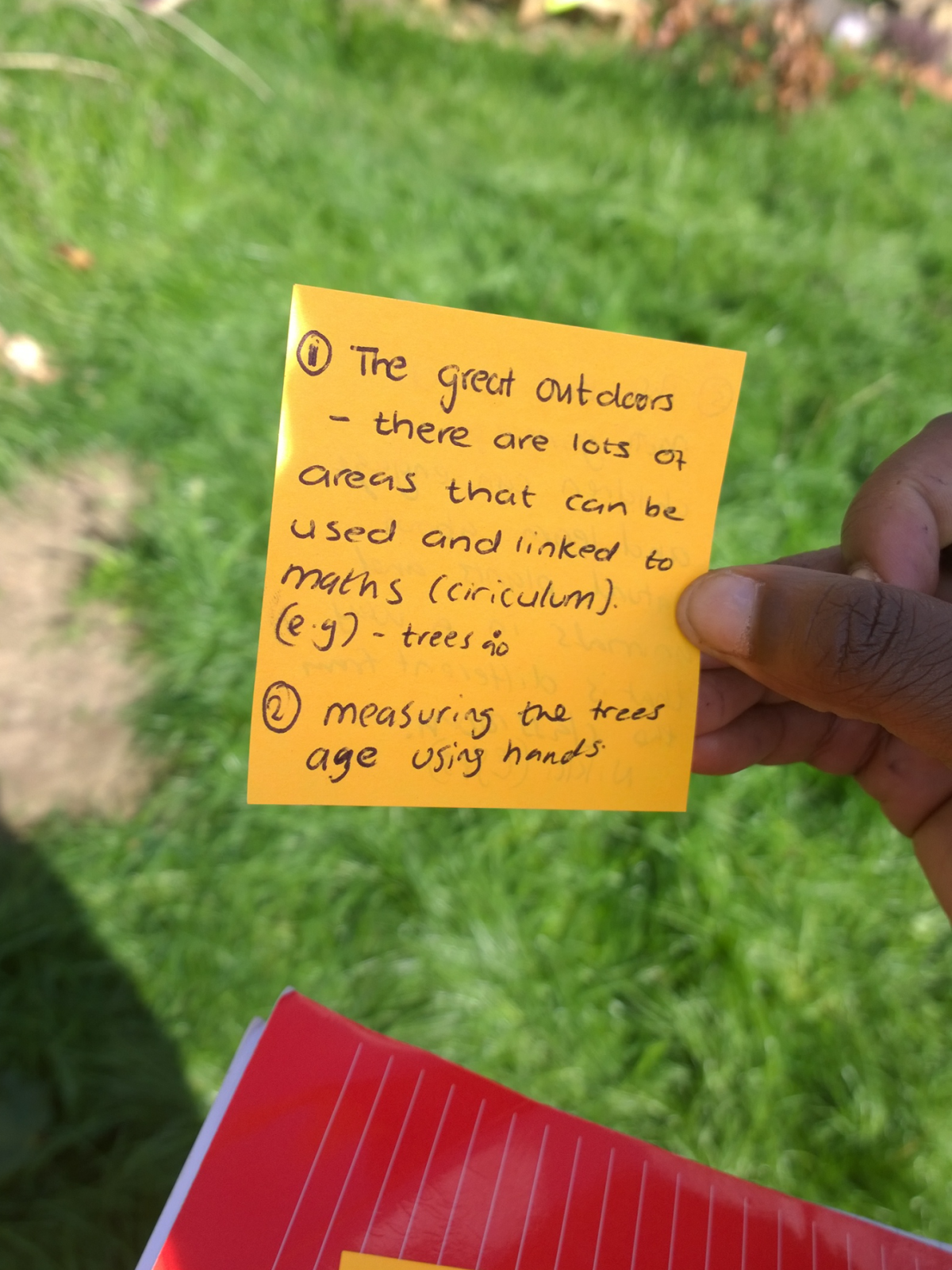
K: It is an opportunity for schools to apply to receive an award of £500 worth of equipment from a prescribed list. They receive two hours of training with one of our trainers on site, and an audit of their school grounds. And they also receive a climate curriculum kit, which is a choice of scientific equipment, or for early years a kit to help them teach the curriculum.
H: So they can really tailor how they use their £500 grant to what their school is like and what it needs and what it’s missing?
K: Yes, absolutely. This year we’ve got 53 different items or kits that they can choose from, with a variety of prices.
H: What are the hottest ticket items that schools usually spend on?
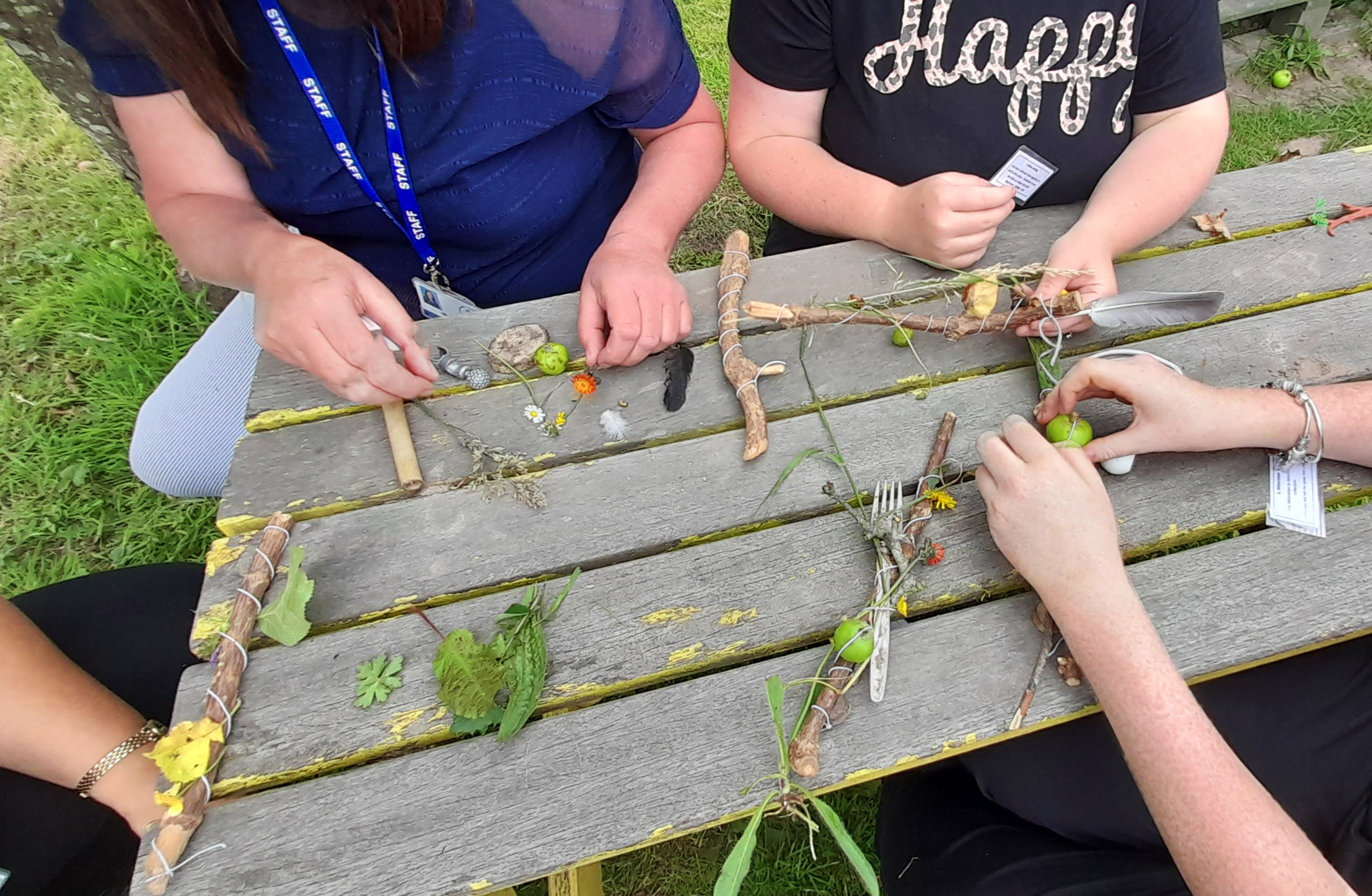
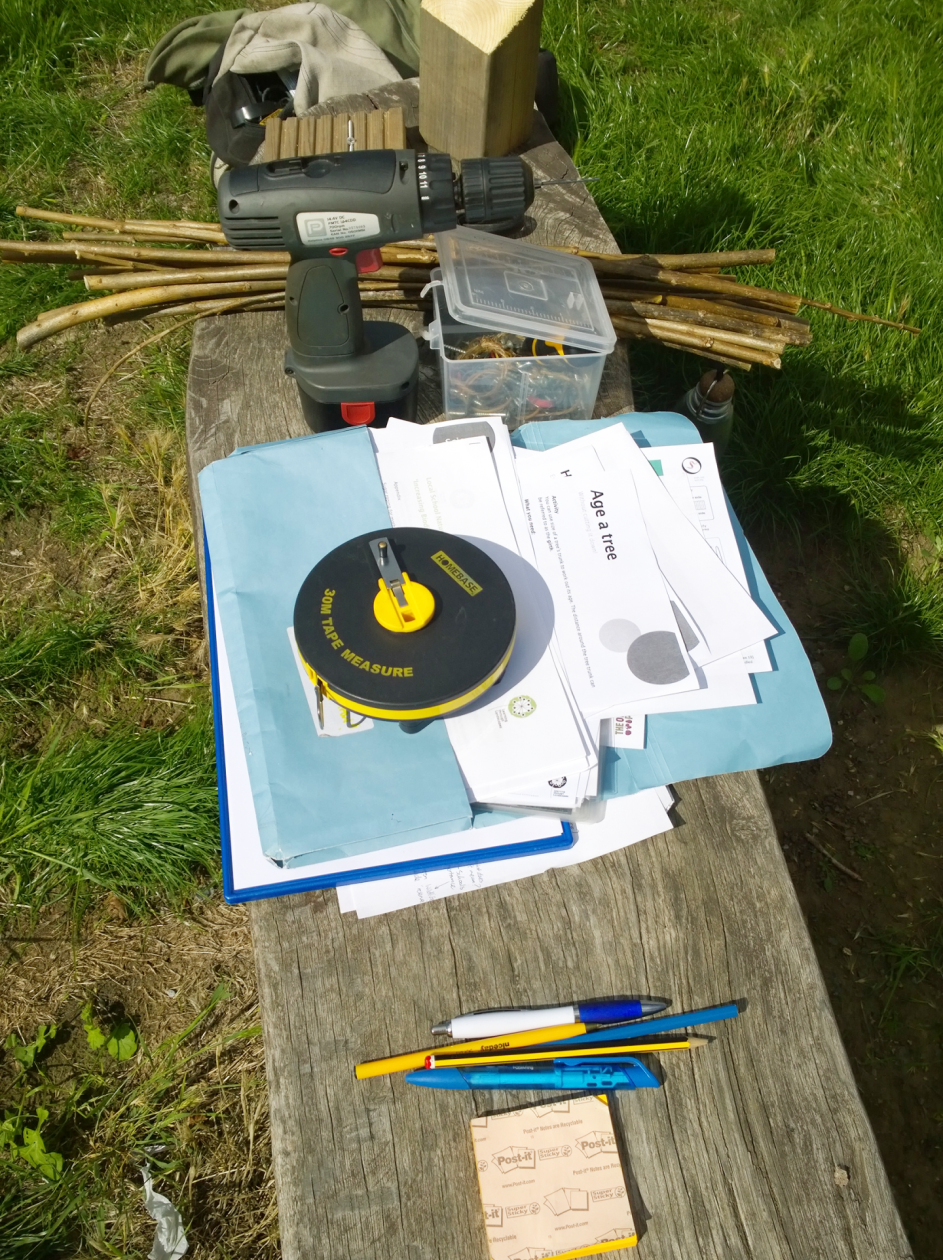
K: That is a great question. Den building always comes out on top. Den building is by far our most popular kit. That comes in at the £250 mark, so they’re still left with lots of money to spend. We had a kit of really chunky figures, good for little hands, of a variety of different people that you might see out and about in your community. They were very popular.
H: For role-playing or doing little skits of social scenes?
K: Exactly, yeah. And that plays into the community aspect that we ask for. There’s a question within the application form on how they will include the community. Some settings will say they work with local care homes, the local allotments, other organisations, or they might just want to make the outside of their school pretty for people walking past. So to support that we have a variety of different seed kits for growing flowers and vegetables.
H: That’s to encourage the teachers and therefore the children to think of their school not in isolation, but as a part of their community, through this grant?
K: Yes, absolutely. The Postcode Lottery who fund us and have done for the 10 years are really hot on how they can spread their message of doing good, being philanthropic, taking care of your local surroundings.
H: And you were just mentioning gardening, seeds and things. I imagine that’s the sort of skills that parents and other people in the community can come in and share with the school?
K: Yeah, absolutely. We champion that a lot because there’s always someone, parents or grandparents, that either have an allotment, tend their garden, cultivate seeds every year. That’s a really nice message – it’s nice to know people want to do good, get involved and help and support.
H: It has that multiplier effect, doesn’t it? And those relationships are going to last a lot longer than £500.
K: Yes, exactly.
H: How come £500? What’s the logic behind that figure?
K: That is a really great question. I think it’s an achievable amount. It feels like a substantial amount. It’s not a difficult amount of money to spend.
H: It’s an amount that is a treat, but not a problem. Tell me a bit more about the audits. What do they find out?
K: Okay, so it’s based on our Climate Ready School Grounds work, and it looks at their outdoor areas in terms of does it get too hot there? Is it too cold? Does it flood? Could you use this space a bit better? The audit will just tell them what they’re doing well, give them suggestions for things that they could improve. It’s proving very popular.
H: And then there’s LSNG XL. Tell me about that.
K: LSNGXL is an extension of the LSNG programme, borne out of feedback from schools and also from trainers, that whilst it’s very rewarding going round to schools and leaving all these little hints of inspiration, they didn’t see the end result. So previously successful LSNG schools can apply for the XL programme, which gives them up to 30 hours of training on their school. Some of that time is earmarked to the Playground Revolution work that we do and our Whole School Approach training. Then the remaining hours can be spent however they want to do it. If they want to go crazy with loose parts, we could concentrate on that. If they want to increase their knowledge around setting safe fires, we can concentrate on that. It sticks with the five training topics that LSNG covers, but it’s done at a greater depth.
H: And because it builds on from LSNG, I guess they have a good idea of what has already worked from their initial grant and trainer time. So it’s a really fruitful opportunity for them to build quite specifically on what’s working.
K: Yeah, we certainly hope for that. And perhaps the staff that applied for the initial LSNG award have moved on and another person is wanting to continue it but they either haven’t got the experience or the knowledge. Now we can go in and support them with some more.
H: What a lovely thing to be able to do for schools, and so many schools.
K: It is. It is something that I’m very proud of. I like to make a difference with my work and I’ve worked for corporations before where I haven’t felt that I’ve done that. But since an initial move into the charity sector, for me that just made for a really fulfilling work day. I have a little part in a transformational journey, just getting children connected with nature, even if that’s just taking their reading book outside to sit under a tree. Yeah, it’s a really great thing.
H: So what does 10 years of LSNG mean to you and to the delivery staff?
K: It means that our relationship with our funder is strong and it goes from strength to strength. Postcode Lottery are a very supportive funder and it gives us the opportunity to go and celebrate with them when they have a gala evening where they invite all of their funding recipients and also some of the winners – the people whose doors they’ve knocked on with big checks – those people.
So that’s a lovely opportunity to share that with them and to see the breadth of who they work with. I’ve definitely felt trumped by some stories of people that work in medical research that are doing phenomenal things. Or the people that train rats to sniff out mines, to make areas safer for people. So then when I say work in education and we get children to go outside, I feel a little bit, oh, you know, ‘what we do is great, but your story is amazing’. It just seems a bit…
H: I disagree wholeheartedly! Especially when you’re talking about 4,500 schools worth of children, that’s going to be tens or hundreds of children for each one of those schools. That’s enormous!
K: Yeah, you’re right. For every teacher that we get hold of we can almost guarantee that their class full will benefit in some way, and that’s happening daily.
H: And the teachers too, of course. It’s easy to concentrate on child wellbeing, but teachers spend all of that time with all of those children cooped up. Anytime that we can get them out and enjoying their spaces better, that’s got to keep people in teaching and help with their sense of satisfaction and wellbeing.
K: Yeah, absolutely. Inevitably, no one really wants to come to a twilight session that starts about 4pm after a heavy day of teaching. So sessions tend to start off slow, but by the end, everyone’s always super engaged, and with the feedback we get: ‘this is the best training session I’ve ever been to’ or ‘I wasn’t looking forward to this, but I didn’t know how much I needed just to come and stand on our playing field’, that kind of thing.
H: And that’s lovely, isn’t it? Because that means that the £500 for whatever sort of equipment they buy with it is really beneficial. But actually that moment of standing on a playing field and having one of our staff members say to them, ‘this in itself is a gift, this is a resource that you have’. In a way you don’t even need the grant. You need that cultural moment to recognise what it is that you’ve got and how you can use it.
K: Yeah, absolutely. That it’s a priceless opportunity.
H: And talking about celebrations, we’re celebrating too?
K: We are, yeah. 10 years needed marking as an occasion. So why not have a party? So that’s what we’re going to do. Throughout Scotland, Wales and England we’re going to be hosting an opportunity to get involved with some of the outdoor work that we do, a variety of very practical workshops. Teachers can come and share their stories and add to their toolbox of skills to share with their pupils. Details will be announced over the next month or so.
H: And we’re still in the window of this year’s application for anybody who wants to get involved in an LSNG grant.
K: We certainly are. We’re open until the 13th of March to get applications in. Have a look at our website.
H: Brilliant. Thank you so much, Kirsty. I hope that you also get to have a lie down in the middle of a nice green playing field every now and then and just feel really glad about what you’ve been part of.
K: Yeah, every opportunity I get!
H: Thank you.

Apply for your Local School Nature Grants, and come to the party!
Get your LSNG application in now! The deadline is the 13th of March. You’ll find lots more information here too.
We’ll be holding our celebration events all over the UK, between May and October this year. Sign up to our newsletter where we’ll be announcing dates soon. Events are open to everyone – you don’t have to have had a grant in the past.
We look forward to seeing you there!