Turning a flooded playground in Walsall into a much-loved school pond
The children and teachers at Leamore Primary School can hear the birds in the neighbouring park, but can’t see them.
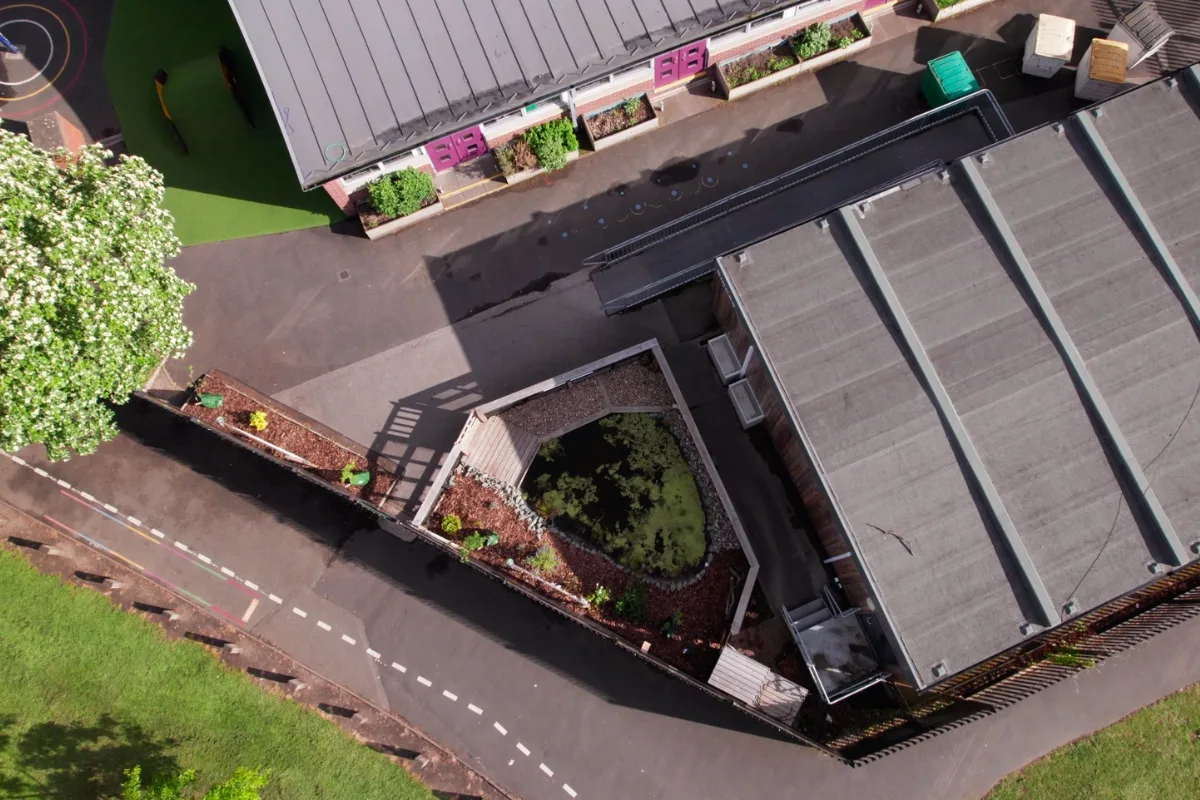
The school’s small yard is surrounded by tall, solid black metal sheet fencing with spikes at the top. The area does not feel safe; teachers routinely do a sweep before school for needles or other dangerous items thrown in from the park.
Within our small grounds, this is like a safe haven for our children.
“We’re from an area of massive deprivation” says Deputy Headteacher Gavin Dwyer. “Our children don’t get very many experiences outdoors. And anything that the council do try to put into place is often damaged through antisocial behaviour. Within our small grounds, this is like a safe haven for our children.”
Staff say that while the community is jaded, the school itself is wonderful, with an energetic leadership team, a caretaker who has made huge changes to the school’s water use, recycling, composting and insulation, and a governor who is an arctic explorer, who went to Leamore himself.
 |
 |
|---|
Hard surfacing and standing water
“Historically we were a concrete jungle. We didn’t have access to much in terms of green spaces at all. And that was something that we really wanted to put in place,” says Gavin Dwyer.
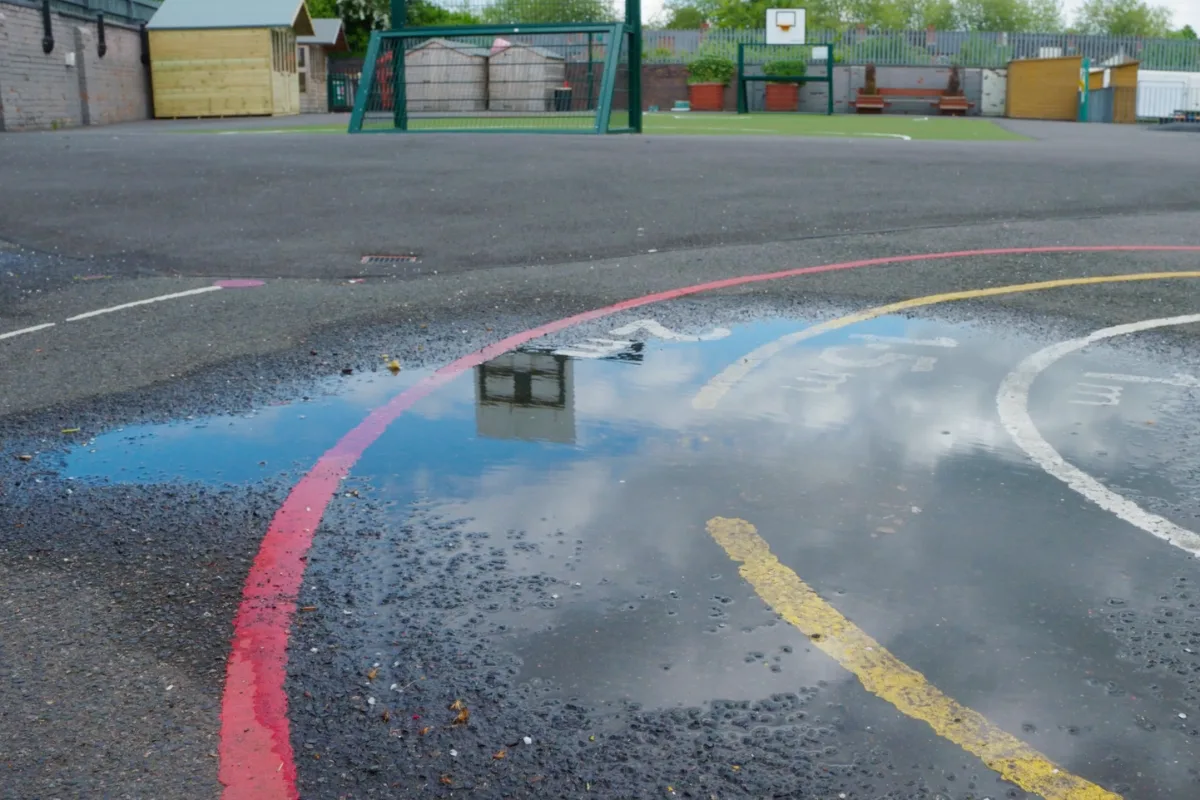
Their small outdoor space was further limited when it rained, and the run-off pooled at the lower end of the concrete yard. A mobile classroom took up yard space and exacerbated the run-off issue.
“There weren’t any drains (by the mobile classroom) so the water would run straight off the roof onto the playground. That meant that they couldn’t use some of those spaces. It became unsafe and sludgy,” says Lindsey Hobbs, who is an LtL Delivery Officer and Leamore’s Sustainability Lead.
How is flooding affecting schools?
65% of school sites are at medium-high risk of flooding and the Department for Education predicts more interruptions to learning as a result of climate-change related flooding events. One period of high rainfall in 2007 caused 158 London schools to be flooded, and schools were closed across England with a total of 400,000 pupil school days lost – estimated to have an economic cost of £12 million, not including property damage.
84% of UK school grounds are hard surfacing or maintained grass, offering little mitigation in a changing climate, as well as being uninspiring for children.
Digging a pond from the tarmac
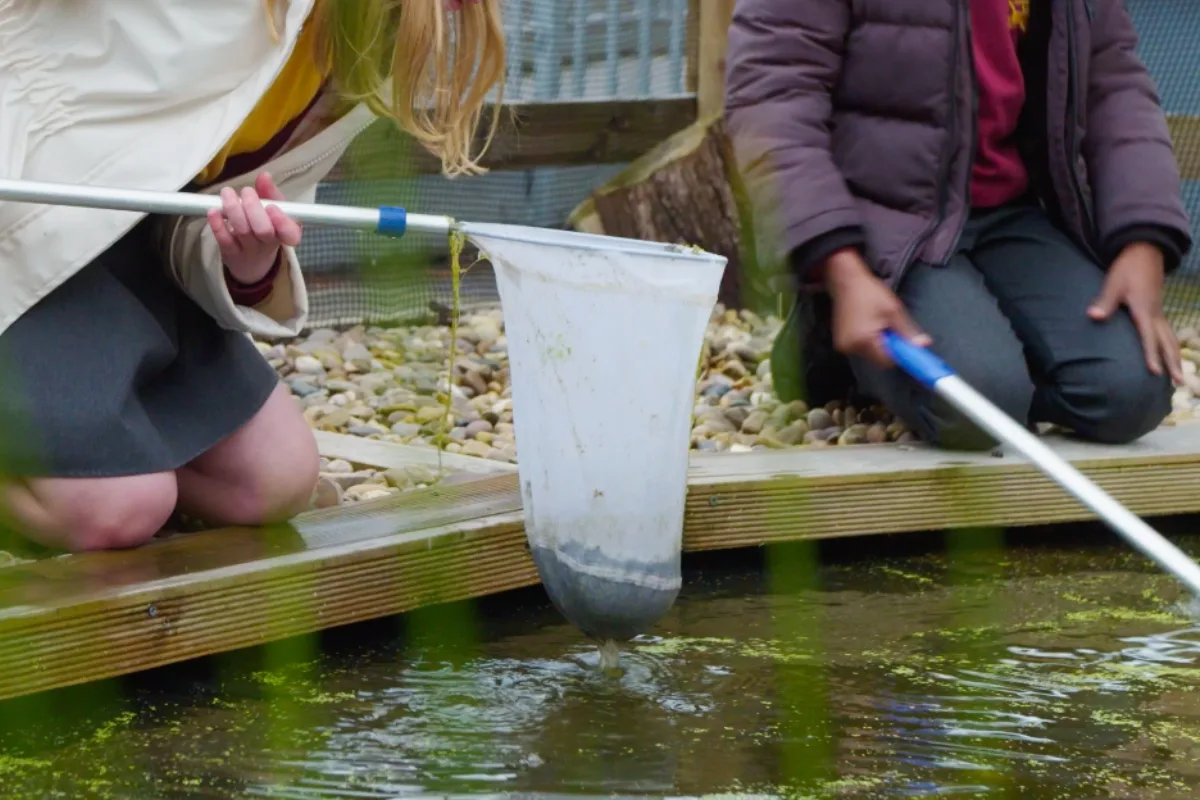
The school were really enthusiastic about the idea of a pond. They received funding from the National Education Nature Park, dug the hole, lined it, filled it, and installed fencing for safety.
At first, they saw the water levels fall as the water evaporated. It was their caretaker who devised a water management system whereby the water from the mobile classroom runs into the pond, and then the overflow from the pond is diverted through the fence and dispersed into the park.
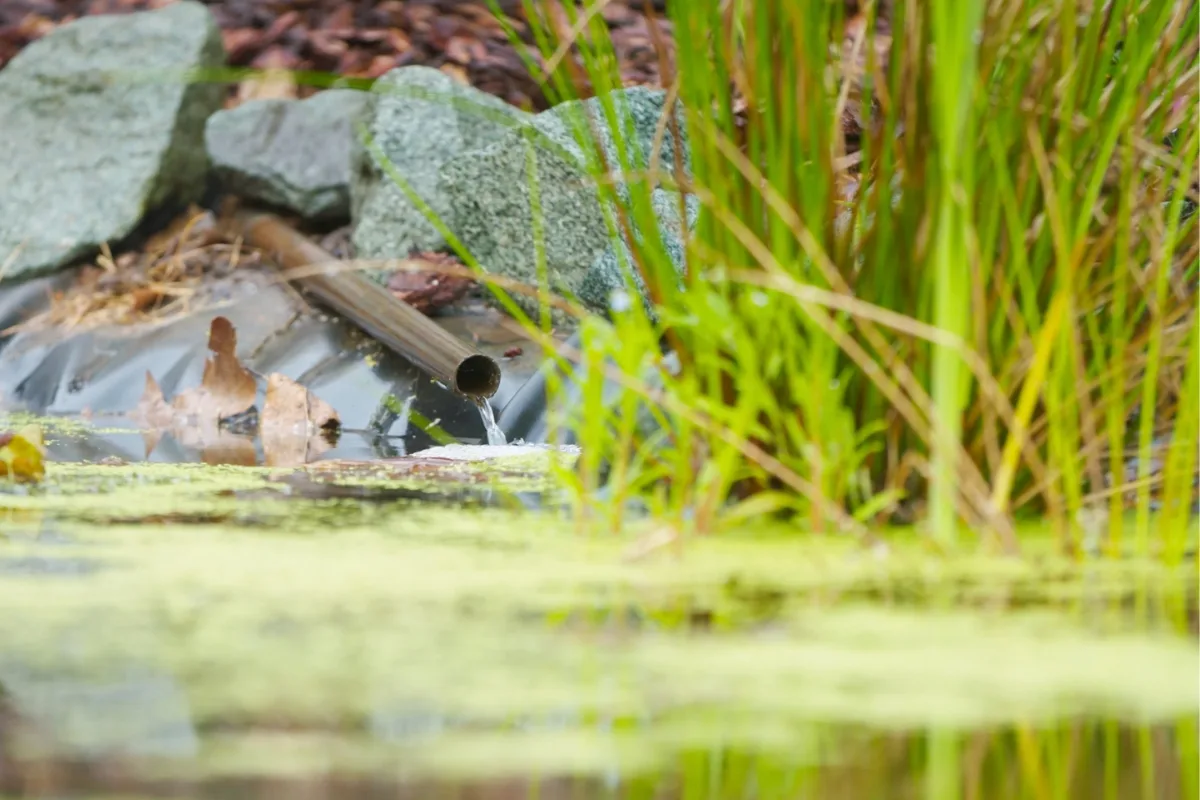
They really savour this space, they know how precious it is.
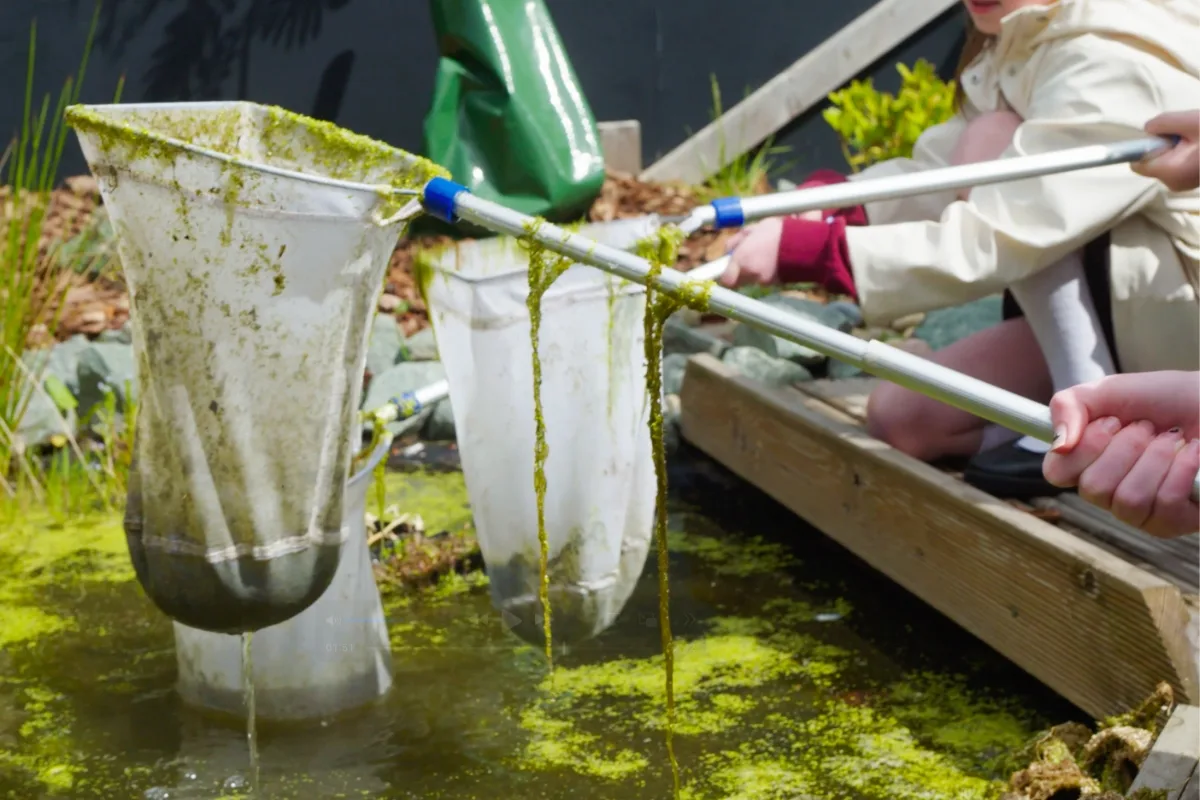
Lindsey says, “The kids have really embraced the pond as their own, and they’re really respectful of it. They will look after the pond, making sure that the litter’s tidied up. They really savour this space, they know how precious it is. The whole school can see the impact that the creation of the pond has made to everybody’s lives here.
“I’ve done some staff training, so everyone’s had input on how this pond can work in terms of curricular links, and how they can bring groups out here. And I hear people constantly talk about how they’ve used the pond in their lessons during the week as well, and how much of a different environment it’s created for the children to learn around.”
 |
 |
|---|
Boosting biodiversity in the school grounds
It’s early days for the diversity of the pond itself, but when birds visit, Lindsey says that the children respond with a real warm, calm welcome. Where previously they might have chased a bird around the yard, now – as guardians of the space – they are proud to host visitors.
It gives a natural opportunity to see the world around us, whereas before it was quite barren.
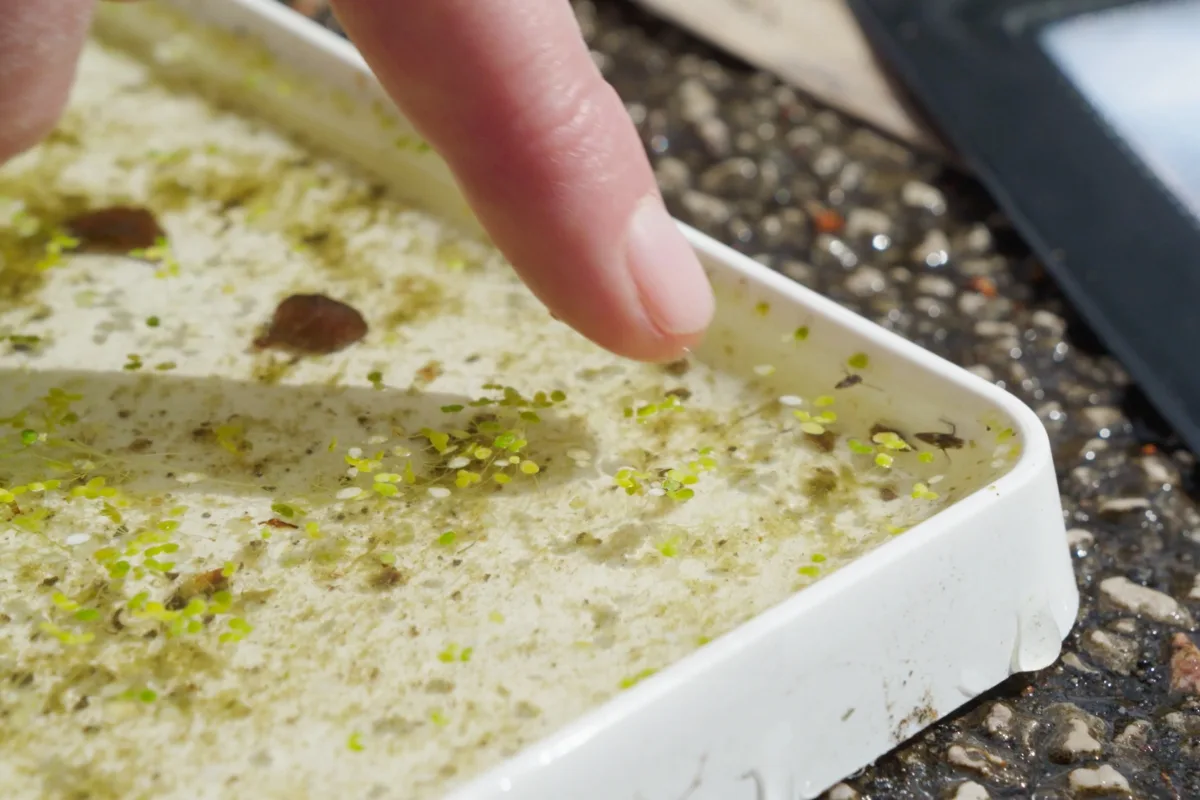
“Putting the pond in place and bringing that water and green spaces into our playground meant that biodiversity has improved massively. It gives a natural opportunity to see the world around us, whereas before it was quite barren. Children are pointing out mini beasts and things that they’re found for you. And naturally so much more conversation happens around the natural spaces than used to happen. That’s been a massive impact for us,” says Gavin Dwyer.

Children hear about climate change in the news, and worry
“Teaching about climate change is really important for these children here at Leamore, because there is climate anxiety. And more and more children are starting to hear about it in the news, and they’re unsure of how to talk about it to adults.
“Due to the area of deprivation, our parents and our communities might not necessarily always talk about that climate change element that is worrying those children. So by putting climate change education into our curriculum, it’s giving those children that opportunity to speak about things that really do worry and bother them.”
Thank you to the children of Leamore Primary School, Deputy Head Teacher Gavin Dwyer, and LtL Delivery Officer Lindsey Hobbs.
Ways to get involved
- We visited schools all over the UK to see the full range of climate challenges they were adapting to. Read the other case studies from schools dealing with heat stress, high winds, poor air quality, and biodiversity loss.
- Our Climate School 180 project has been adapted to be a self-directed course for teachers. Sign up to our newsletter to hear when the courses are launched.
- You can also use our school grounds climate audit app on its own.
- Leamore was one of our Climate School 180 schools supported by the University of Stirling, who evaluated the process and brought collaborative inquiry and reflection. A deep dive into the thinking behind teaching climate change in this way can be found in the Climate School 180 evaluation report.


Related News

Teaching climate change through making adaptations to school grounds


Why pupils at a South London school are taking action to defend their classrooms from overheating