
How to teach maths outdoors
This Maths Week, discover how to teach maths outdoors across all age groups using outdoor maths trails in the school grounds.
[Updated 21.09.2026]
Maths is a brilliant lesson to teach outdoors. With so many different subject areas to explore, nature provides an unbeatable canvas to engage and inspire pupils. From using leaves and pebbles to understand shapes to taking objects from the natural world to support equations, there are countless ways to make maths work outside of the classroom.
For many pupils, maths can be a tricky topic. It may feel harder to bring the fun to numeracy compared to a creative subject like literacy. However, stepping outside can lead to learning opportunities that are joyful, messy, engaging, and memorable; all through utilising outdoor tools that are less readily available indoors.
From September through to November, Maths Week kicks off across Scotland, Ireland, England, and Wales, providing a great opportunity to get creative and have fun with maths. We’re here to share some ideas for taking the subject out into the school grounds this autumn, but first, why teach maths outdoors this Maths Week?
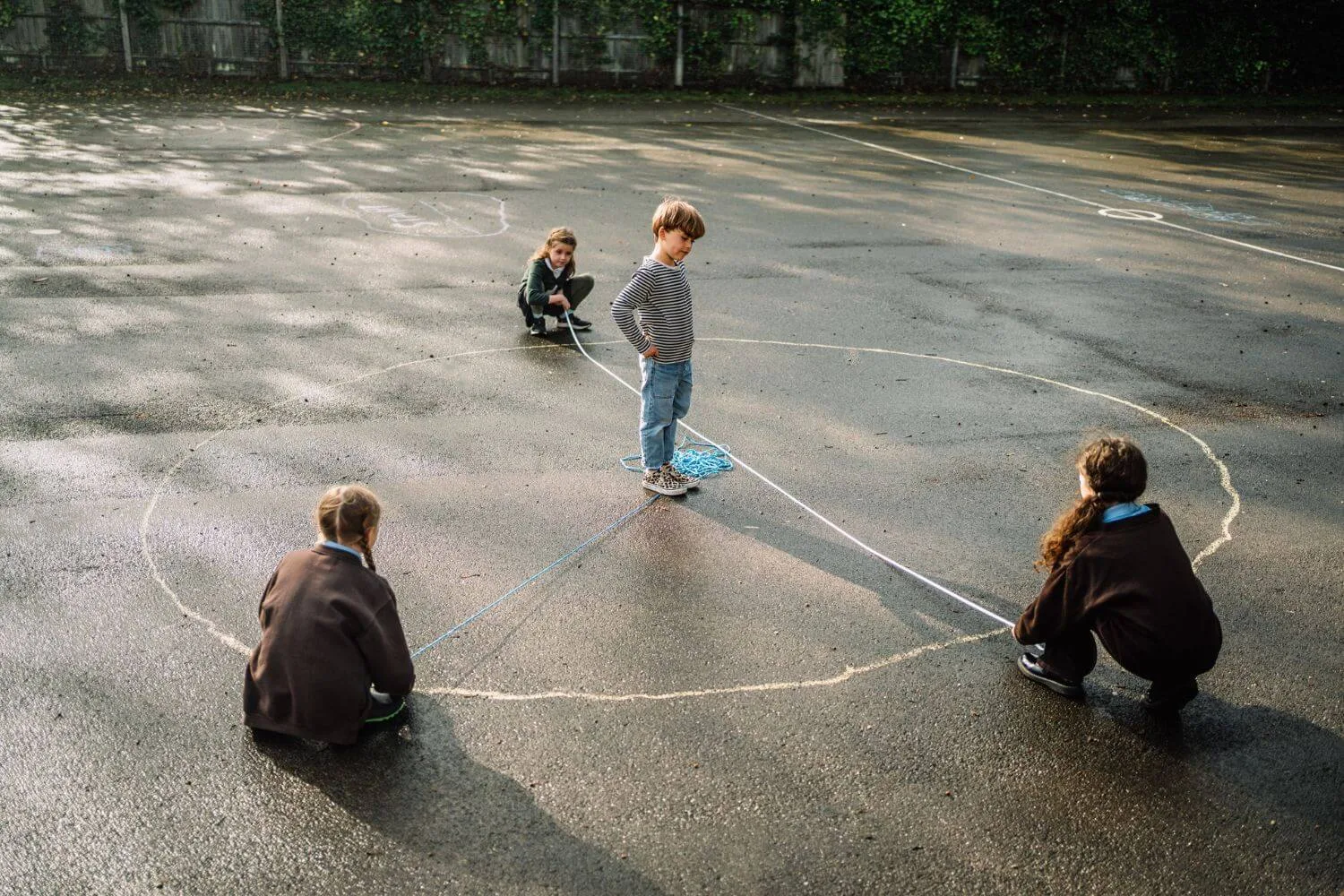
Why teach maths outdoors?
There’s no doubt that getting outside is good for us, and we know the key benefits of outdoor learning for improving child development; supporting mental health and wellbeing; and promoting a more inclusive and engaging learning system. But why is it so valuable to teach maths specifically outdoors?
‘Taking maths outside isn’t just about making the subject fun. It also helps children master the very basics of the subject,’ says teacher and educational consultant, Juliet Robertson, author of Messy Maths: A Playful, Outdoor Approach for Early Years. Research shows that there are several core requirements that children need in order to get to grips with maths – all of which can be found outside! These important requirements are:
- Access to concrete materials: For example, rocks, sticks, and leaves for counting, comparing, and measuring
- A pictorial understanding: By learning outside, children can experience mathematical ideas in 3D and from every angle in real life
- An understanding of the language and symbols of numeracy: The real life context of the outdoor classroom can make tricky language a lot easier to get to grips with
So, how do you actually make the transition towards teaching your maths lessons outdoors? Maths Week is the perfect opportunity!
When is Maths Week 2026?
Maths Week sets out to raise the profile of the subject while also encouraging children to pursue it by promoting a more positive and inclusive approach. Maths Week events are listed online, with a calendar, resources, challenges, and competitions available for each nation:
- Maths Week Scotland – celebrating the theme ‘Maths Matters’ from 19-27 September
- Maths Week Ireland – celebrating the theme ‘Maths at Work’ from 10-18 October
- Maths Week England – celebrating the theme ‘Maths on the Move’ from 15-21 November
- Maths Week Wales (Mathŵyl Cymru) – celebrating from 21-29 November
In this blog, Emma Brown explores how using outdoor maths trails as part of your Maths Week activities can offer a holistic way of looking at maths in the world around us, using the school grounds and the local environment.
What are maths trails?
Maths trails are organised walks through an area outdoors where pupils can experience maths in the real world. A trail can help highlight for pupils the huge use we make of number and mathematical concepts in our everyday life and how maths surrounds us in even the most unusual areas.
How a maths trail works
- Observation: Pupils observe the environment (e.g. the school grounds, a park) and identify mathematical concepts, such as shapes, patterns, measurements, or ratios.
- Problem creation: Based on their findings, pupils formulate math problems that others can solve.
- Problem solving: Other pupils (or the original observers) solve these problems, applying their mathematical understanding to practical situations.
Benefits of a maths trail
- Engaging learning: It transforms math from an abstract subject into a tangible, interactive experience and can be used to support maths in the wider community- encouraging families to explore maths related activities in an outdoor, nature-based context.
- Real world connections: Pupils see how math is applied in their everyday surroundings, making it more meaningful.
- Conceptual understanding: By finding and creating problems, pupils deepen their understanding of mathematical principles.
- Problem-solving skills: The process of observation and problem creation enhances critical thinking and problem-solving abilities.
- Creativity: Pupils can be creative in their observations and the types of problems they devise.
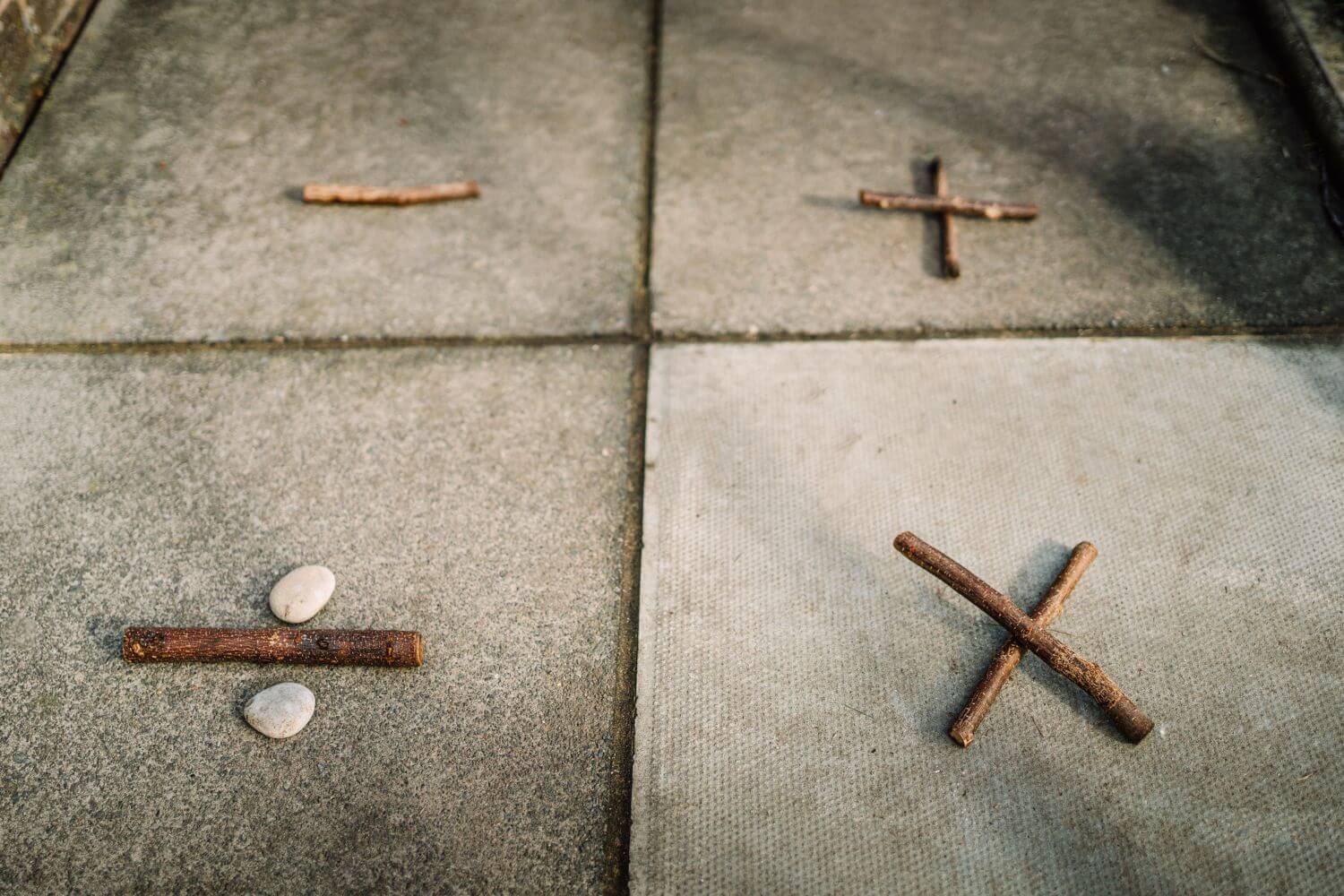
Ideas for outdoor maths trails
You can create your own simple maths trails in the school grounds or your local area around a range of topics including:
- Shapes: Look for different geometric shapes in buildings, nature, or playground equipment.
- Patterns: Identify patterns in tiles, brickwork, or natural formations.
- Measurement: Measure distances, heights, or circumferences using available tools or estimations.
- Counting: Count objects like trees, flowers, or windows.
- Data collection: Collect data on different items, like the colours of leaves or the types of vehicles passing by.
Alternatively, take a look at some of our outdoor lesson ideas which you can implement into a maths trail with your pupils:
- Mathematical Scavenger Hunt: Use this maths play activity to find concrete examples and real life maths in your school grounds. This outdoor lesson idea will support any area of maths learning for all ages, and can be easily adapted to suit the need of your pupils.
- Compass Treasure Hunt: Use this secondary maths activity to build knowledge of angles and directions whilst hunting for treasure. This outdoor lesson idea will help to build pupils’ understanding of the link between compass points and angles, and develop their ability to describe, follow, and record directions.
- Leaf Snap: Use this early years maths activity to develop vocabulary and the early stages of mathematical reasoning. This outdoor lesson idea will encourage communication through a fun game, while also connecting children with nature around them.
Another great resource is Primary Science Teaching Trust’s ‘Let’s Go! STEM Trails’ resource. The 29 STEM trails in this book are also designed to enthuse, inspire, and support teachers to deliver not only science, but focus on delivering maths in thought-provoking ways. The trails have been created using the outdoor environment to discover and understand maths concepts in early years, primary, and secondary settings.
Get ready to teach maths outdoors this Maths Week!
Whether you’re celebrating in Scotland, Ireland, England, or Wales, we hope you enjoy a fantastic Maths Week outdoors this autumn! And remember:
- Enjoy creating outdoor maths trails that can bring maths to life in a social, interactive and fun way.
- Encourage pupils to be involved in designing challenges along the trail, combining creativity, learning and exploration, whilst ensuring that all pupils — regardless of ability, or learning style — can participate meaningfully, building confidence and enjoying maths in the real world.
- Engage families in participating in the outdoor maths trails you’ve created, as they can be hugely beneficial for learning and transforming them into shared adventures in learning.




Related News
Parents! Nine ways to encourage your children’s school to do more outdoor learning


The social media ban for under-16s: How to redirect children from the screen to the outdoors