Financial literacy for children

This content was developed as part of a funded partnership between Learning through Landscapes & Lloyds Bank to promote outdoor financial education. Learning through Landscapes retains responsibility for the content and views expressed.
Financial literacy. What comes to mind when you hear that phrase?
It can sound like quite a grown-up topic that can be hard to digest. But in reality it’s about helping young people make good choices, build confidence and feel more prepared for their future. Yet many teachers say it can be a challenging topic to teach.
When asked why young people are leaving education without money skills, 20% of teachers point to the complexity of financial topics and products, 18% say money is a sensitive topic, and15% say young people are just not interested. Teacher confidence (25%) and a lack of support and resources (26%) featured highly, while a massive 79% said other subjects just took priority.
Children should learn about money
And yet everyone thinks that children need to learn about money. Almost all teachers (96%) think schools should offer financial education. 50% of parents think so, but only 6% say their children have had regular sessions on the topic. 53% of children say they don’t get meaningful financial education, and 3 in 4 teachers say most students leave education without key financial skills.
But children are already worrying about money
According to the 2024 Financial Education report, the cost of living was the main worry for 56% of young people, and nearly 70% of UK adults say better financial education would have helped them manage their finances as the cost of living rises. Student loans and easy availability of modern credit products have normalised debt for young people. Wages are low and unstable; prices are rising. Education can at least help young people recognise these pressures.

Children should start learning about money young
Children form money habits when they’re young. Most of the teachers surveyed by the Money and Pensions Service agreed children should learn about it in primary school, with a quarter (26%) saying it should start in nursery. Almost half (44%) said between the ages of 5-7 and 19% thought ages 8-11.
And take learning about money outside
Children already spend plenty of time indoors at desks. If teachers want to approach a challenging topic in a fresh way that can engage a wide range of pupils, taking learning into a different environment can provide new opportunities for participation, discussion and real-world connections. And where do many children most like to be? Outdoors!
Brains like being in moving bodies
Our delivery officer, Jane Mackenzie, is interested in how simply walking outside helps learning and memory, and pointed us to research cited by Stanford Medicine:
It turns out that when you walk, a series of impressive biological processes occur in your brain. Researchers have observed that aerobic exercises, such as walking, are often associated with increased levels of brain-derived neurotrophic factor (BDNF), which … promotes the formation of new neurons while also increasing the strength of connections between existing neurons. Much of this activity occurs in the hippocampus, which is a part of the brain that is heavily involved in memory and learning functions.
Research using bright-coloured scans has shown that children’s brains light up after 20 mins of moderate activity, which “may further support the use of moderate acute exercise as a contributing factor for increasing attention and academic performance”.
Learning outdoors makes you feel better about yourself
“Children show greater resilience, improved self-esteem, and increased self-efficacy when engaged in outdoor learning” according to a Natural England briefing on the links between natural environments, learning, and health. Meanwhile, the Outdoor Classroom Day Muddy Hands report, says that 88% of teachers report children are happier after playing outdoors.

The actual green-ness makes a difference
Research on green spaces and cognitive development in primary schoolchildren found that greenery within and around schools (measured using satellite images) was linked with an enhanced working memory, the mental ability to continuously manipulate and update information.
But use whatever you’ve got
We would love there to be green, nature-rich spaces for every child, but don’t let perfect be the enemy of good, as they say. Your school needs to work with whatever it’s got.
Woodlands, parks, and green spaces can provide fantastic opportunities for outdoor learning, but school grounds offer the most accessible and equitable option because they are available to teachers and pupils every day. As LtL Delivery Officer Emma Brown says, “If teachers are to discuss financial literacy outdoors, it needs to be widely accessible to schools, and that would mean being within the school grounds.” If you only have a tarmacked playground, do the lesson there; most of the benefits still apply.
Learning outdoors is memorable
An outdoor lesson is memorable just by being different from other lessons. In their Outdoor Financial Education resources, which we are hosting on our site, Lloyds Bank suggest using things from the natural world as analogies for financial goods and services. For example, imagine you are a bird creating a nest. What ‘goods’ do you need and how do you choose? These analogies are likely to lodge in the brain and be retained by pupils who might struggle to remember details from an indoor lesson.
Real-life settings for real-life skills
More than just being a lesson in a novel space, more than using analogies that work for young imaginations, more than moving the body to activate the brain, more than the mental benefits of being in green space, more even than finding places to learn where you can be happy, engaged, resilient and confident in your skills, it just makes sense to learn real-world skills in real-world environments.
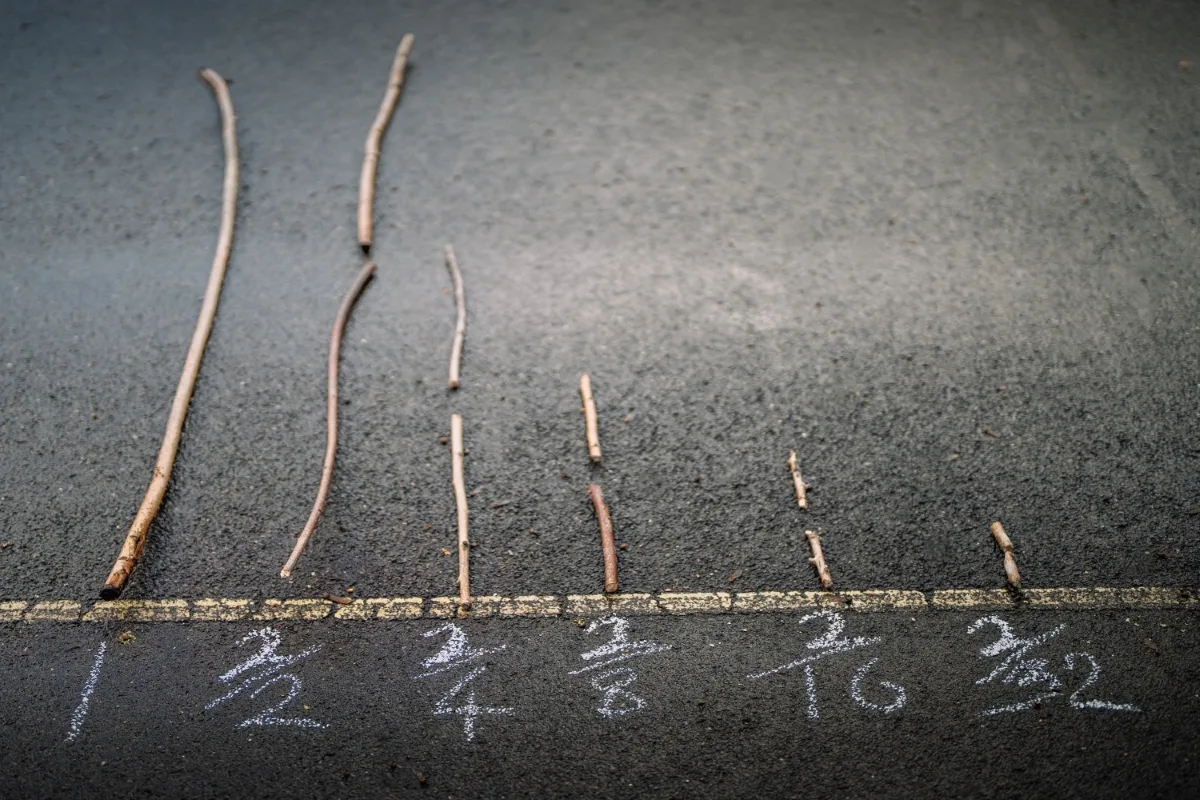
Try teaching about money outdoors
Lloyds Bank ran a pilot on their Outdoor Financial Education sessions, testing them with year five students in six UK locations. They say:
The outdoor sessions boosted engagement, especially among students who were less engaged indoors. Teachers observed improved behaviour and focus. Of the students we worked with, 57% felt more confident discussing money with their families, and 33% gained confidence in staying safe with digital money.
Following the successful pilot, Lloyds are sharing a downloadable resource, which we’re hosting here on the Learning through Landscapes website. The activities encourage children to explore ideas such as choice, value, services, and digital safety through discussion, movement, and outdoor exploration.
Download Outdoor Financial Education resources
This resource contains two session plans for children aged 9-11. In ‘Banking on it!’, pupils compare the choices made by nesting birds with their own as consumers, then design their own ‘wild’ bank. In ‘Staying Safe with Digital Money’, an outdoor digital trail helps them spot scams, protect personal information and know when to ask for help. Both include discussion prompts, certificates and activities to try at home.


Related News
Parents! Nine ways to encourage your children’s school to do more outdoor learning


The social media ban for under-16s: How to redirect children from the screen to the outdoors