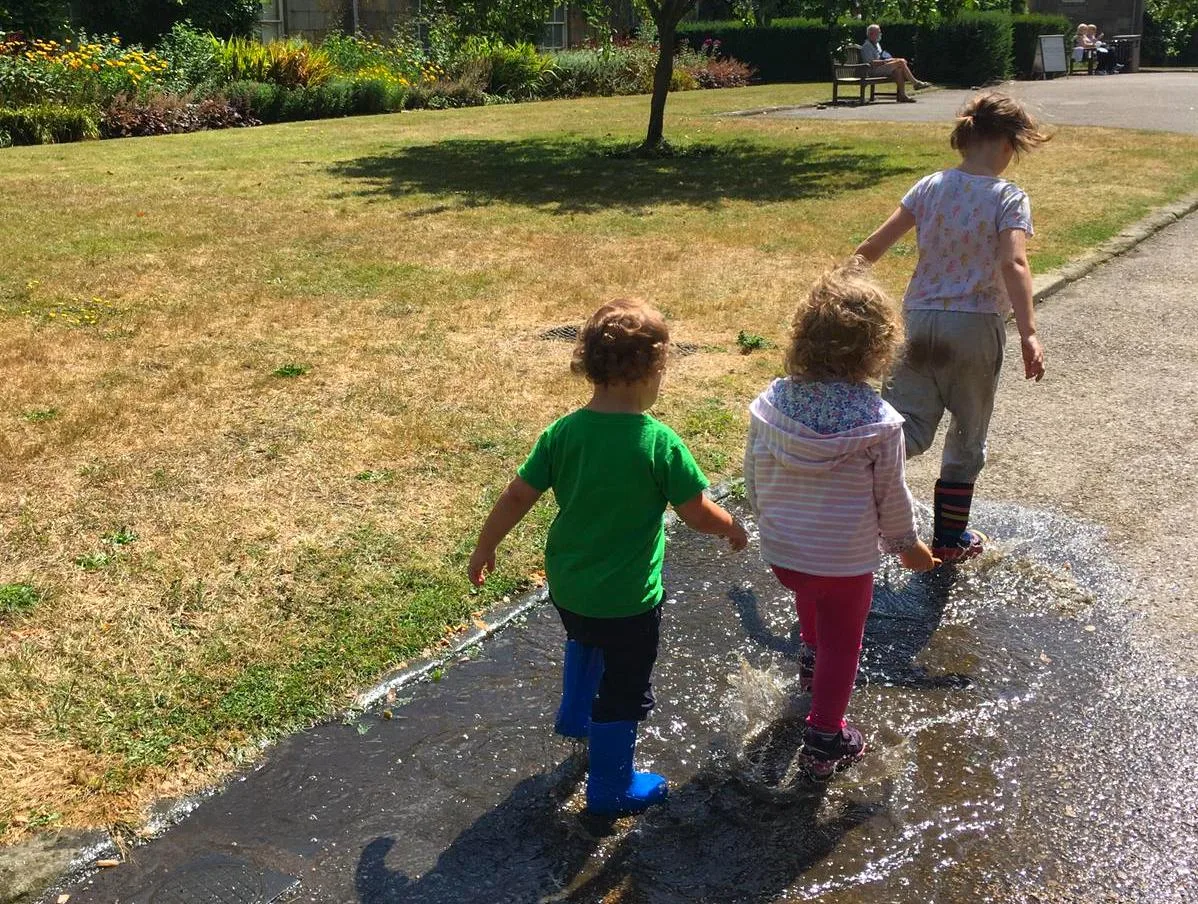
How a slippery log offers more than a seesaw, and the £10,000 grants to help schools make nature-rich spaces
We’ve partnered with WWF to help schools increase their nature-rich spaces, and LtL’s Claire Abercrombie explains how for her family nature will always be more inspiring
How children use space isn’t always the same. It varies depending on who they are with, how much energy or time they have, the seasons, the weather, and increasingly the changing climate.
Claire Abercrombie sees this in her family life as well as in her time in schools as one of LtL’s Training and Development Officers.
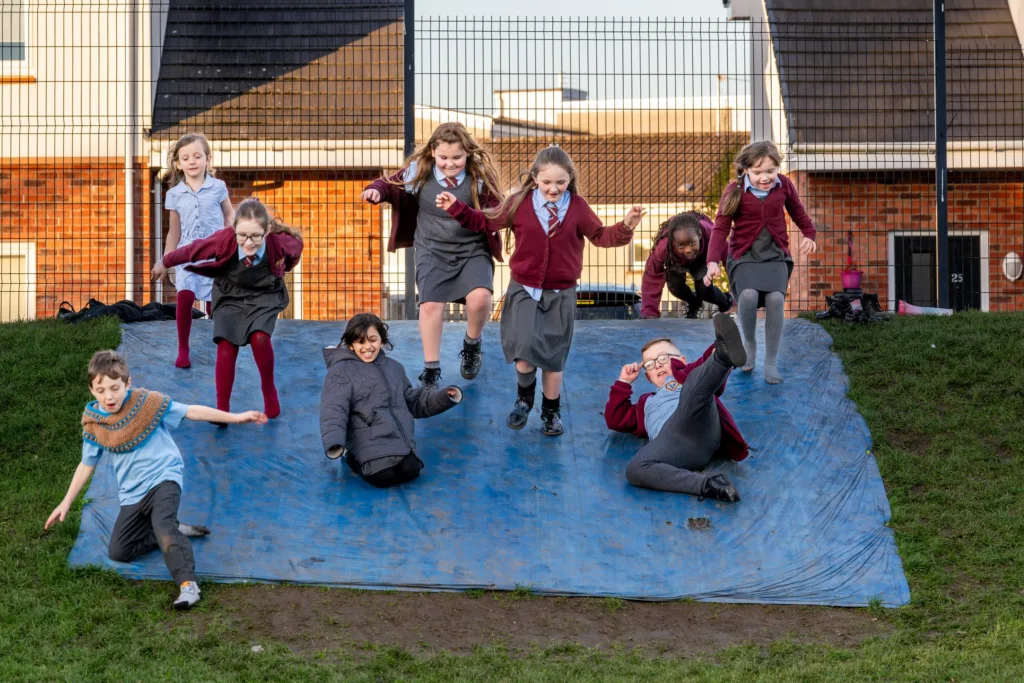
“Imagine playing with the same fallen log on different days. If you have friends with you, perhaps you’ll use it as a table in an imaginative role-play game. Maybe the next day, you’ll climb or balance – you might even jump off. But, the day after that, it’s raining: the log is wet, making it slippery and difficult to balance on. Perhaps you practice balancing anyway: walking slowly, but not jumping this time – because you’ve used your risk assessment skills. You might become observant, watching small insects trying to find shelter on the log, making up imaginative stories about where they’re going. You could incorporate the log into den building or a game of hide-and-seek. Maybe it is simply a place to sit and observe others sometimes.”
“In our family we tend to spend a lot less time at a playpark than a natural space. Fixed equipment is enticing for a while, but there are only so many times you can repeat the same activity – climb this part, swing on here – unless you have someone to play with. Often play equipment is surrounded by safety surface to reduce the risk of injuries – but these surfaces can get hot. As our climate changes and we see increased temperatures, some fixed play equipment may become unusable on the sunniest days.
“Every type of location can provide opportunities to play, but for me nature-based play will always win out. It is powerful, proven, and a joyful way to support wellbeing. There is a richness of experience – nature is simply a fascinating thing to explore.”


Nature-based play will always win out
Natural outdoor spaces change with the seasons, inviting curiosity and the chance for even the youngest children to make interesting observations.
This type of nature-based play should be a part of every child’s school day. School grounds have a vital role to play to ensure equitable access to nature. This is where children spend so much of their lives, and by making good use of their existing space schools can offer a lot of outdoor time to all of their pupils without having to find funding for school trips, or deal with the extra barriers of unfamiliar surroundings or teacher confidence in going off-site.
Nature-rich spaces – in schools!
Natural outdoor spaces change with the seasons, inviting curiosity and the chance for even the youngest children to make interesting observations.
This type of nature-based play should be a part of every child’s school day. School grounds have a vital role to play to ensure equitable access to nature. This is where children spend so much of their lives, and by making good use of their existing space schools can offer a lot of outdoor time to all of their pupils without having to find funding for school trips, or deal with the extra barriers of unfamiliar surroundings or teacher confidence in going off-site.


But only 30% of primary schools offer daily nature.
However, a survey by WWF (Schools for Nature Report 2024) recently found that only 30% of primary schools offer daily nature experiences for all pupils. Worryingly, the report also found that there is a wealth disparity within access to nature: 52% of primary-aged pupils in areas with low free-school-meals provision access nature daily, compared to just 18% of pupils in primary schools with high free-school-meals provision. The message is clear: there is still work to be done to make school grounds richer in nature, while ensuring that schools feel empowered to use them regularly and often.
For me nature-based play will always win out. It is powerful, proven, and a joyful way to support wellbeing
— LtL’s Claire Abercrombie
£10,000 grants for schools with WWF
With this in mind, we are delighted to be working with WWF to deliver ten Happy By Nature grants to UK, state-funded primary schools. This pilot project will embed nature-based play by offering £10,000 to develop nature-rich spaces within school grounds, alongside training and support to ensure the changes are sustainable, accessible and biodiverse.
All schools can access free toolkits and resources to help you get outdoors more often from WWF.
Recommended Posts
We’re bringing over forty organisations together in a big new push to improve school grounds





Related News
Stay up to date with the latest news and insights from Learning through Landscapes. Discover more stories about outdoor learning and play.
Climate School 180: The story so far

Why school grounds must be part of the climate change solution