Parents! Nine ways to encourage your children’s school to do more outdoor learning
Never underestimate how much difference applying a little pressure, offering a little help, or just showing an interest can make.
If you are a parent of school-age children, you might be very well ready for the end of the summer holiday marathon hustle. It’s been a long hot one; Scotland is back already and the rest of the UK goes back over the next couple of weeks.
But perhaps you have also enjoyed seeing your children spending more time outside, and less on screens (although we see you, two-parent or single-parent working families — screen use might have gone way up rather than down).
If they have got outside maybe you’ve witnessed their imaginations flourish as they play on beaches, in parks or gardens or campsites. Perhaps you’ve been reminded about how much fun they can get out of whatever they find lying around — pebbles, feathers, sticks, sand, flowers, water. You might have seen them learning too, working things out, following their curiosity, getting into a flow state.
If so, you might feel a touch of sadness in sending them back indoors.
How can parents promote more time outdoors at school?
We’ve got a lot of evidence proving the benefits of outdoor learning for children, but also how few schools do it consistently (for example 88% of teachers say children are more engaged in learning when lessons take place outside, but only 27% of schools surveyed have outdoor learning in their curriculum for all pupils*). Our whole mission at Learning through Landscapes is to support educators to teach outdoors more, while providing funding to improve their outside spaces.
If you are a parent who would like your children to be outside more in school time, here are nine things you can do to help your school make it a priority.
1. Show curiosity
Ask your new class teachers, and senior staff, what teaching they do outside already. Just your curiosity and interest will send the message that parents care about this. Many primary teachers are worried about sending children home dirty, so showing that you want them to be outside will be reassuring.
2. Ease the transition to secondary school
If your child is about to start secondary school, this is a particularly good time to ask their new teachers this question. Our Better Breaktimes, Better Transitions project demonstrated that this transition is huge for children who are suddenly expected to stop playing, losing all of the social and developmental benefits that come with it. Their outdoor space is likely to be less interesting and the social pressure to be cool is heavy. All the more reason their teachers should help normalise outdoor time!
3. Create a Stay and Play
If you have some time before or after school, you could talk to the school about creating a Stay and Play and being a parent volunteer. This means keeping school grounds open for play outside of school time, which has all sorts of benefits – from community involvement in the school, more time and help to make the space nice, opportunities for children to enjoy school outside of the dynamics of playtime or lessons, multi-age play, and a safe place for families who don’t have gardens and might not be accustomed to seeking out parks and other green space.
4. Get involved with decision-making
Volunteer for the parent council, the PTA, or even consider becoming a governor to help shape the conversation around your child’s education and the priorities for school grounds.
5. Volunteer your skills and expertise
If you (or grandparents) have gardening skills, woodworking skills, or could cook up something delicious with some herbs the children have grown, then get involved! Real world application of educational tasks can be surprisingly impactful.
6. Participate in Outdoor Classroom Day
Ask the school what they are doing for Outdoor Classroom Day. It’s just one day, but the Muddy Hands report showed that two-thirds of schools increased playtime and outdoor learning after getting involved in Outdoor Classroom Day.
7. Make changes outside of school
Making changes at school is about creating culture change outside of school, too! Speak to out-of-school provision and childminders to make sure they are making space for outdoor play within their plan.
8. And during extra-curricular activities, too!
Don’t forget clubs and activities! Part of what makes summer special is the slower pace and the increased free time. Children and young people spend around 30 hours a week in school, and then have a timetable of clubs and activities. Could you reconsider the amount of extra-curricular activities they do and make more space for free play in their schedule? Research shows that freely chosen, unsupervised play has significant developmental advantages, but there’s often just not enough time. If they do need to be in clubs, note the ones where they get to be outdoors.
9. Encourage them to apply for support
Tell your child’s school about our application windows. We offer a number of projects which offer dedicated support to help educators implement outdoor learning and play across all stages. My Nature Play re-opens to applications from early years settings next month, followed by our Local School Nature Grants in the new year. Sign up to our newsletter to make sure you’re the first to know!
*Stats from the Outdoor Classroom Day Muddy Hands report and the WWF Schools for Nature report




Related News

The social media ban for under-16s: How to redirect children from the screen to the outdoors

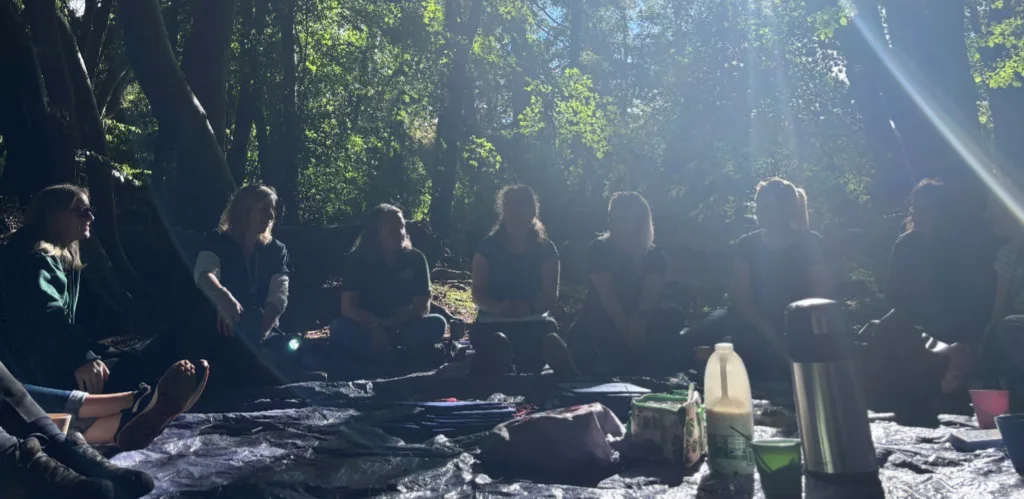
Into the wilds with children, their early years staff, and their families!