The social media ban for under-16s: How to redirect children from the screen to the outdoors
We discuss the upcoming social media ban, and what teachers and parents can do to make this a win for play and time outdoors.
The government is ‘giving children their childhood back’ in a move supported by nine out of ten parents.
But some children are not delighted, like this girl who spent nine hours on social media last weekend and expects now to spend her time “staring at the wall”. Her parents might well be nervous too.
As the digital landscape keeps changing and evolving, we’ve already decided to change how we share photos of children. Now, we ask: could big tech’s loss be a potential gain for outdoor engagement, play, nature connection, all the good stuff? How can parents and teachers quickly fill the void that children (and maybe parents) could be feeling right now, as something very time consuming and all-consuming is removed?
Address this as a detox scenario
An enormous US analysis of over 300,000 responses to the Torrance creativity test showed that since 1998, creativity scores have been declining while IQ continues to rise. The author of the analysis, Kyung Hee Kim, found it was due to the decline of free, unstructured play in children’s lives, and the rise of screen use. Here she is discussing ‘the creativity crisis’ with Rob Hopkins.
Children will need some help during this detox, and schools can support parents in this. There is no shortage of evidence supporting the benefits of reduced screen time (see this review of 186 studies comparing the psychological outcomes of ‘screen time’ vs ‘green time’), but there is a vacuum of knowing or planning for what to do and how to try. There is a shortage of leadership and peer support.
Perhaps a school and parent council could lead something that would really change things, helping teachers and parents to feel ready to support each other when the kids kick off about lack of screen time — but what?
Permission to play
We’d love to see a ‘permission to play’ campaign that focuses on children and young people’s agency, rather than focusing on what they now lack. LtL’s Jane Mackenzie says:
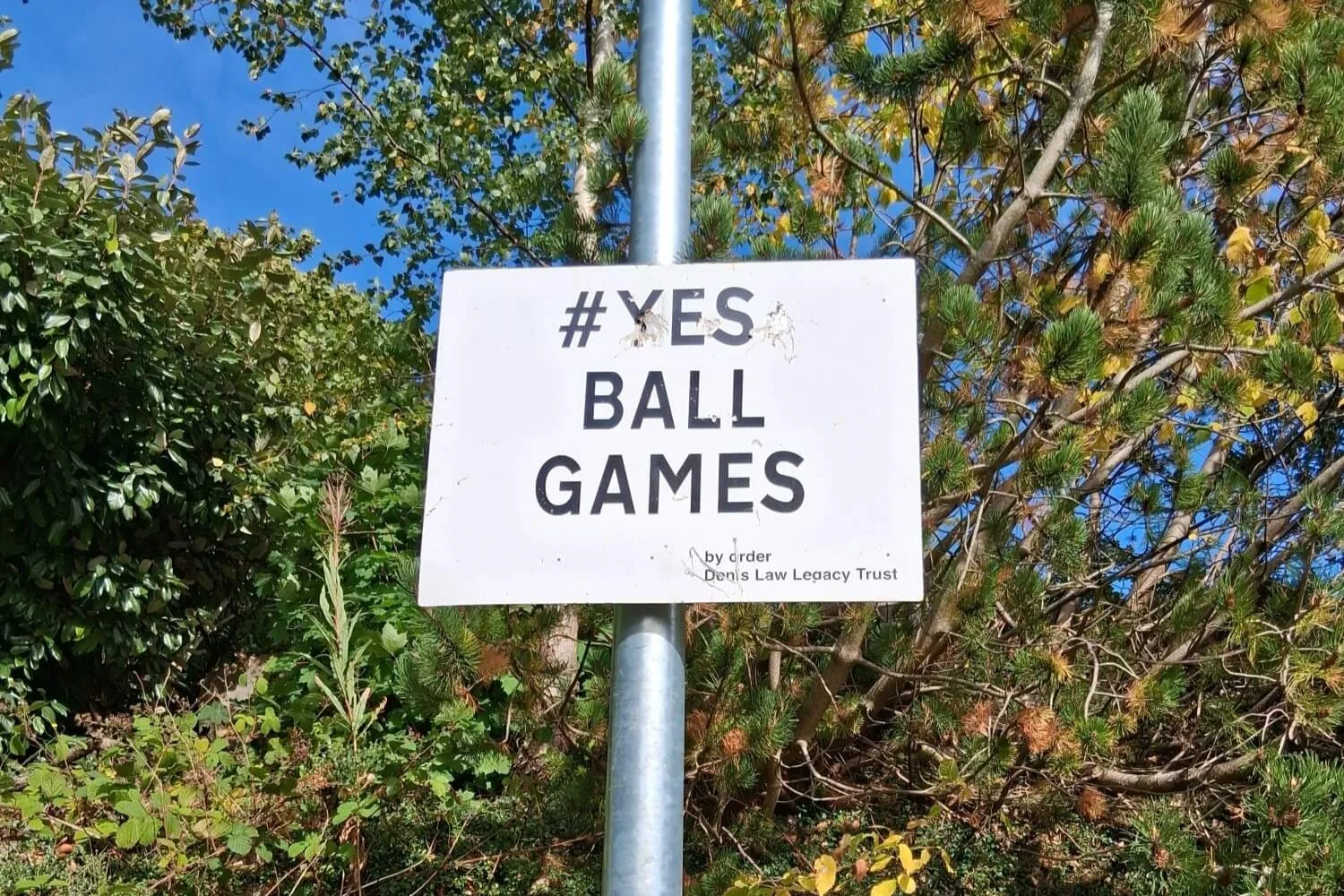
Some enterprising person in my street has set up a low swing from one of the trees and the local children are there now most days. It’s lovely to see and reinforces that idea that when given permission and allocated space, play can happen spontaneously. I also loved this sign on a recent trip to Aberdeen…
Do you need to just stand back?
Play is a natural instinct, but it’ll need some nurture. Our CEO, Matt Robinson, says:
‘Play training’ is a thing. How can parents and schools provide this for children and for parents too? For starters, try just stepping back as the adult and allowing play to (sometimes slowly) break out. Recognise the creativity and independence as it happens.
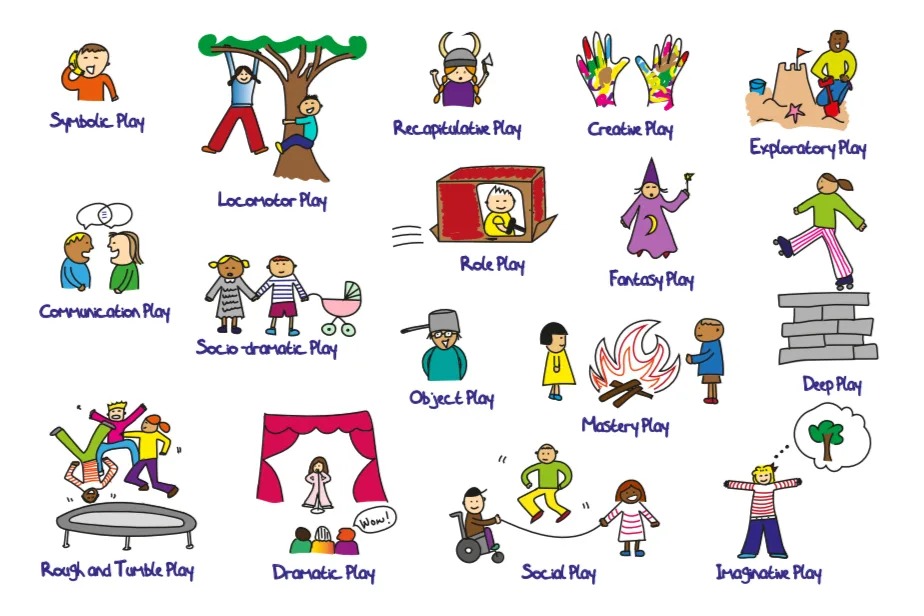
And while learning to stand back, you can begin to identify that there are many, many types of play — and they have names! Take a look at this round-up from the Play Toolkit from Play Scotland to get you started:
But children also need provocations for play!
Here are a few ideas:
- Do children know traditional playground games?
Included among our outdoor lesson ideas (available with a free membership), we have a teaching resource called ‘Games Granny used to Play’. It’s a homework task about discovering games from grandparents or neighbours, or from other countries, writing them up (literacy) and then having a go as a school. - Get some inspiring kit
- Basic loose parts: Open-ended, movable materials with no fixed purpose, that can be combined, designed, repurposed into all sorts of imaginative fun (logs, tyres, pinecones, cardboard boxes, bamboo canes, etc)
- Den-building materials: Rope, tarps, bungees, netting. Could you screw some eye bolts into garden fences or door frames?
- Mini figures: Small characters who might like to have a mini outdoor world built for them!
- Could you set up a school Stay and Play?
For younger children and their families, could you open the school grounds early and keep them available after school for family and children’s play? This may need parental volunteers to manage, but provides a safe space and a routine play opportunity. - Older children: create time to hang out
For older children, we found that basic things like walking to school provides positive activity, friendships and time. Groups ‘walked and talked’ on the way to school, making social time outside of school dynamics, plus creating foundational healthy activity. - Kill two birds with one enrichment stone!
‘Enrichment’ is informal activities — the range of ‘extra’ things like sport, debating, choir, coding, chess, art, dance, drama, reading etc etc. Every nation of the UK has enrichment activities as part of their school curriculums, and all of these build what Schools Week called “social health, the texture of relationships, belonging, routines, and the ordinary joy of doing things together.” Exactly what children need help rediscovering in the void of social media. Schools need to be beefing up their enrichment offerings, and the social media ban is just one more reason to embrace the opportunities. - Don’t fill every moment with clubs and activities. Have unstructured time outside!
Sometimes the basics are overlooked. Parents can find themselves jamming every afternoon with football training or hockey or ballet clubs etc, but a simple walk in some greenspace gives children and adults a chance to just be outside without targets. Loosely plan a day out on the train or bus to a less familiar green or blue space like a bigger park or nearby river. Many parents do this with toddlers, but phase out as the children get older and activities become more formal.
What about the teens? They’re not going to make dens!
Adolescent play is a fascinating and challenging subject. Adolescents do not play like smaller children, and many parents (and young people) miss this fact. We have a couple of projects in the pipeline that will help us make real change in the understanding of adolescent play.
Yes, it can look challenging. Adults need to learn to recognise it as play with important social and developmental functions, and resist the desire to shut it down. It’s not going to be easy — we’ve got used to adolescents shutting themselves away with screens.
For a deep dive into adolescent play, we’ve got a wealth of experience:
- Our Better Breaktimes, Better Transitions project worked with 300 11-12-year-olds to find out how play and better spaces could ease transition to secondary school.
- Our earlier 11-18 Play in Secondary Schools project researched the value of outdoor play for adolescents in secondary schools, spotlighting young people’s views and voices.
- Visit our publications page for all of our guidance related to play at secondary school.
Resist vilifying screens entirely
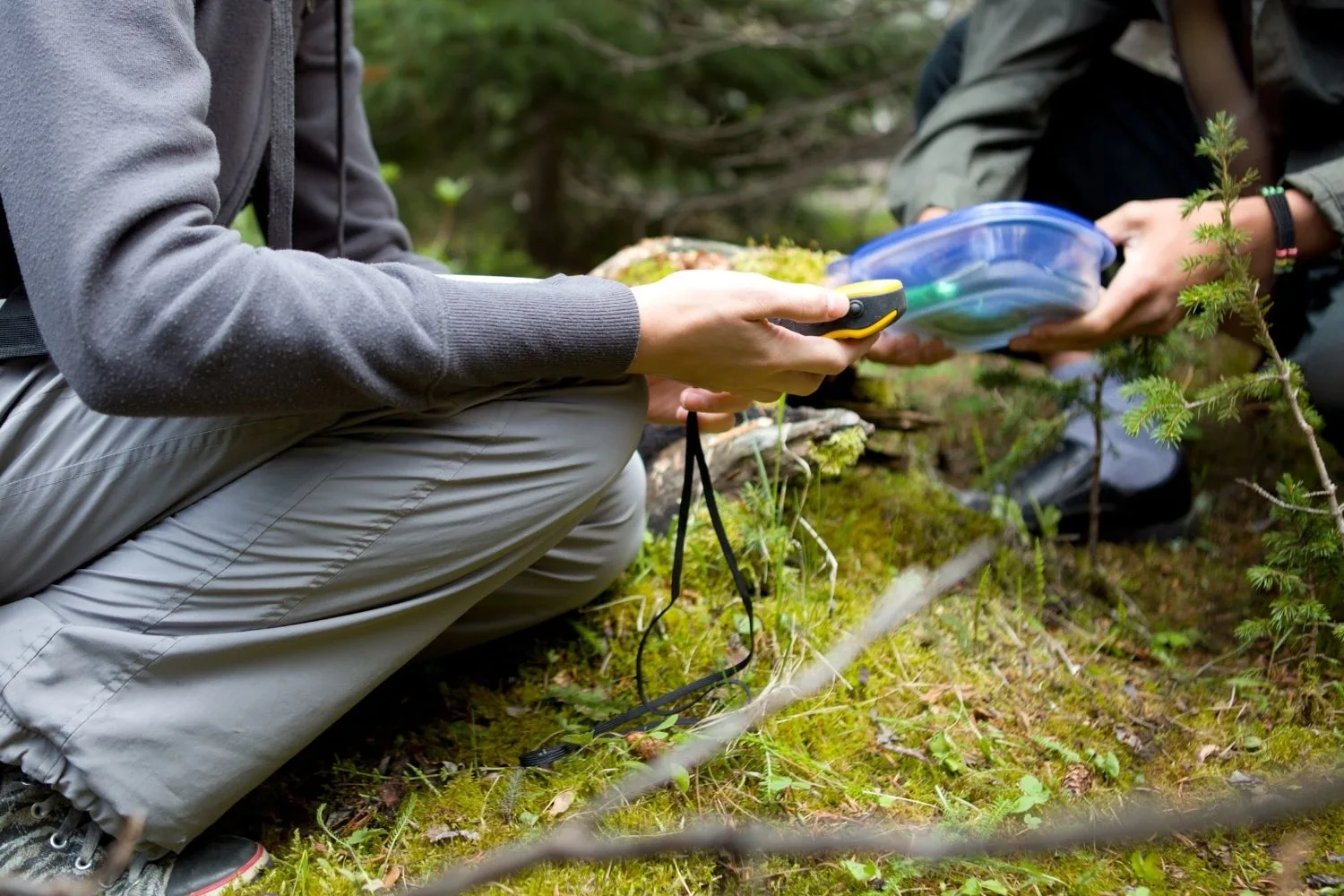
Phones are a tool, ‘screen’ and ‘green’ are not exclusive, and the social media ban as it is will not address all the issues. We need to provide opportunities that attract away from negative screen time (‘doom scrolling’, inappropriate or adult themes etc.) to positive screen time. Geocaching, for example — see the National Trust’s resource on geocaching for families or the Geocaching Association of Great Britain’s curriculum led guide to geocaching for schools.
We need to work out that a ban is not the end of the story. Children (and adults!) need to learn to balance risk and benefit, and learn to use digital tools healthily.
This is the really hard bit: maybe we all need to get OK with being bored!
LtL’s Polly Baker says:
Boredom is a wellspring of creativity and the growing fear of idleness is perhaps part of the problem.
Meanwhile, LtL’s Sophie Walters says:
‘I’ll be staring at a wall’ was a glib response from an obviously very bright girl, but staring at a wall needs to be allowed to become decorating the wall, throwing balls at the wall, sticking posters up on the wall, balancing on the wall etc. Significant sectors of society have relished the convenience of children being indoors on screens for a number of reasons — driving quickly without worrying about folks playing outside, not having crowds of kids visible outside the Londis on a Friday night, not having to fund youth groups, being able to have a lie in while kids scroll YouTube.
Who will be most adversely impacted?
This ban will have the biggest effect on children from marginalised groups. Nicola Killean, Scotland’s children’s commissioner, expressed disappointment with the social media ban, saying:
Children in rural areas, children with family overseas, disabled children, and children who rely on online spaces for identity, support, or community may be particularly affected.
Notice which children are particularly losing those good things that social media offers — they’ll need support to fill that gap.
We need to have a big conversation about risk and benefit
We are so attuned as society to perceived physical risk, but clearly the emotional and developmental risks of social media have run unfettered for years. As have:
- The emotional and developmental risks of children not being welcome in outdoor spaces
- The risks of not feeling boredom and finding their own imaginative solutions
- The risks of not using their muscles, eyes, lungs and brains
Turning all this around is a huge job for everyone, but it is the work that LtL is deeply involved in every day, school by school, at grassroots and policy levels. Support us with a follow on social media, a free membership, a conversation with your kids’ school — and make sure to sign up to our newsletter to receive the latest updates about outdoor learning and play, directly to your email inbox.
Extra resources and research
- Our guides and publications can support you with planning, delivering, and evaluating outdoor learning and play. Key publications available with a membership include:
- Our Good School Playground Guide, designed to make a playground as good as it can be
- Exemplar Play Policy for Schools, an outside play policy for your school that you can download and edit
- Screen time and green time: Useful research and recommendations from our partners at Children and Nature Network




Related News
Parents! Nine ways to encourage your children’s school to do more outdoor learning

Why we’re changing how we share photos of children