We’re bringing over forty organisations together in a big new push to improve school grounds
The ‘School Grounds Collective’ will create a co-ordinated task force to make a difference to the lives and learning of all children in the UK
Do you ever get the feeling that there are so many wonderful people and organisations working for good…
and yet we’re not quite where we want to be…
and maybe if we just all came together and made a concerted push we could really shift the dial?
If we coordinate efforts, share the wins, contribute to each other’s spheres of influence and keep the pressure up, we can raise the bar exponentially.
So that’s what we’re doing.
We obviously care enormously about our area of work – the improvement of school grounds and getting all children outside every day, for better quality play and learning. And so do many other organisations and individuals.
And we all know it’s urgent work. More time outside for children can be part of the solution for so many things that are precarious or worsening – child mental and physical health, behaviour, attendance, teacher retention, and so much more. We are in a hurry – we want to see really meaningful, really widespread change. We want it now!
Collaborating better can only help.
Who is involved?
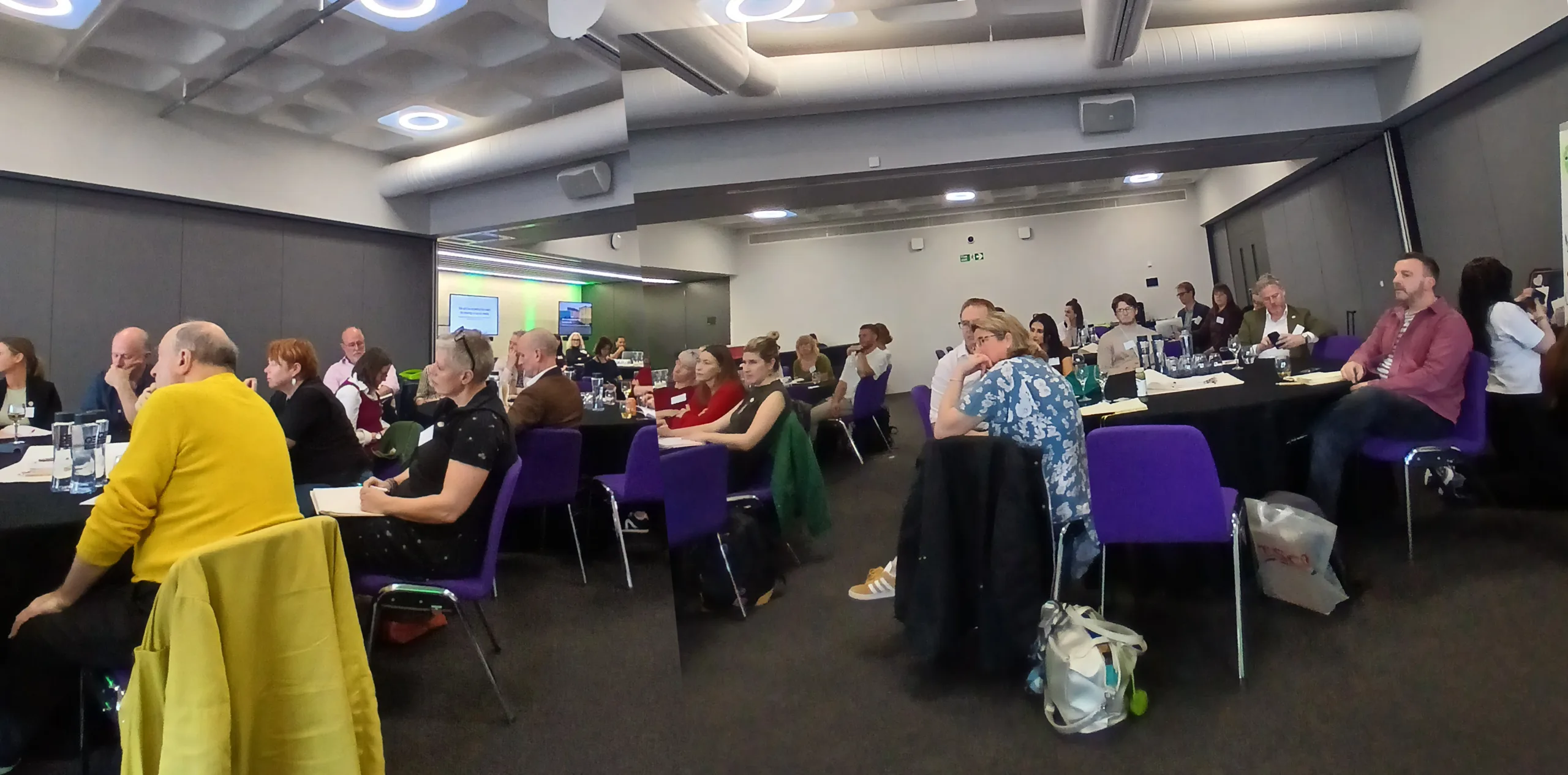
So we’ve launched the School Grounds Collective. We invited seventy people from forty organisations to join us in London. This included WWF, RSPB, Council for Learning Outside the Classroom, Play England, The Land Trust, Outdoor Play and Learning (OPAL) CIC, Groundwork, Royal Horticultural Society, Institute for Outdoor Learning, Place2Be, academics from UCL and Cardiff Uni, Green Schools Project, Down to Earth Regeneration, ONE Environments, Fields in Trust, The Royal Society for Arts, Manufactures and Commerce, Let’s Go Zero, Climate Majority Project, and many, many more, including teachers and local authorities.
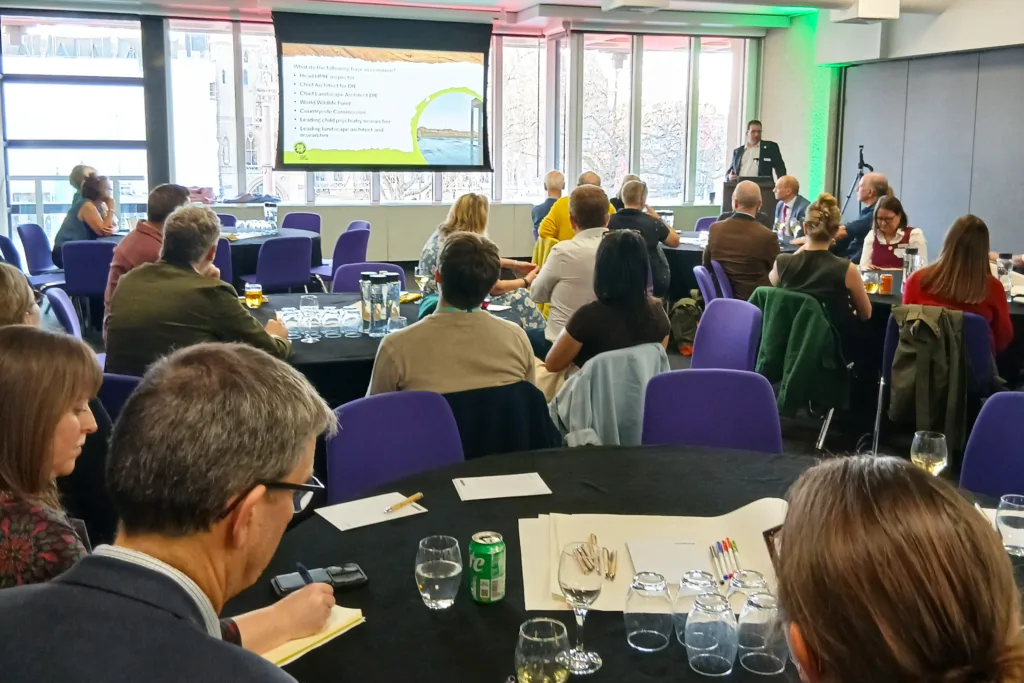
We launched the collective in Westminster, and started out by celebrating the Department for Education’s new Education Estates Strategy, a ten-year plan that highlights the importance of school grounds.
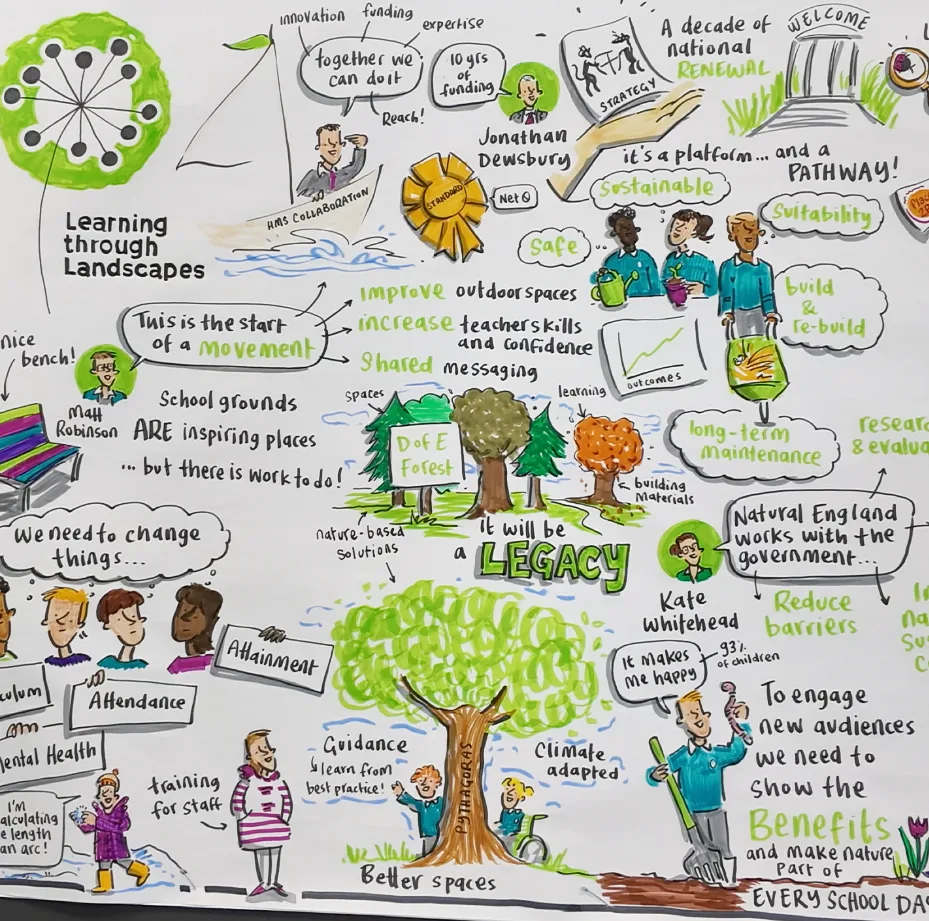
Jonathan Dewsbury, DfE’s Director for Education Estates and Net Zero, and Kate Whitehead, Senior Officer for Connecting Children with Nature at Natural England, spoke at the event.
Then we held open workshops to begin to outline what the collective could work to achieve. The talks and workshops were captured in this live illustration of the event, by Rebecca Osborn.
And what next?
Everyone is feeding in what they hope that the collective will achieve, how they envisage it working, what they would like to get from the new entity and what they would like to put in. True collaboration means hearing from everyone and charting a course together. In a few weeks we’ll collate responses, see where there are similarities and differences, and we’ll draw together a plan of action – meeting up, sharing focus, maximising our missions. We’ll report back, here and on LinkedIn.
Over to Kate Whitehead, who said at the event:
We know that nature can unlock a multitude of outcomes for both people and wildlife. We have all the pieces of the puzzle, but somehow collectively, we still haven’t quite put the picture together. Teachers tell us they are overwhelmed with the sheer number of resources out there. They’re unsure how, or even if offers of support are relevant to their teaching practice.
We can’t assume that all teachers and school leaders have the same experience of nature that those of us in the room do. And even if they do, we can’t assume that they have the time or the confidence to act on them. The environment sector has an essential role to play in supporting schools and teachers to bring nature into the school day in a way that suits them, their setting and their pupils.
No single one of our organisations has all the right answers. Just as no school grounds or community is the same, there is no one-size-fits-all approach here. But if we can coordinate our efforts as a collective, there’s a real opportunity for us all to support not just environmental outcomes, but wider societal ones, including those in education.
If you think that you or your organisation should be part of the collective please email us at collective@ltl.org.uk




Related News
Stay up to date with the latest news and insights from Learning through Landscapes. Discover more stories about outdoor learning and play.