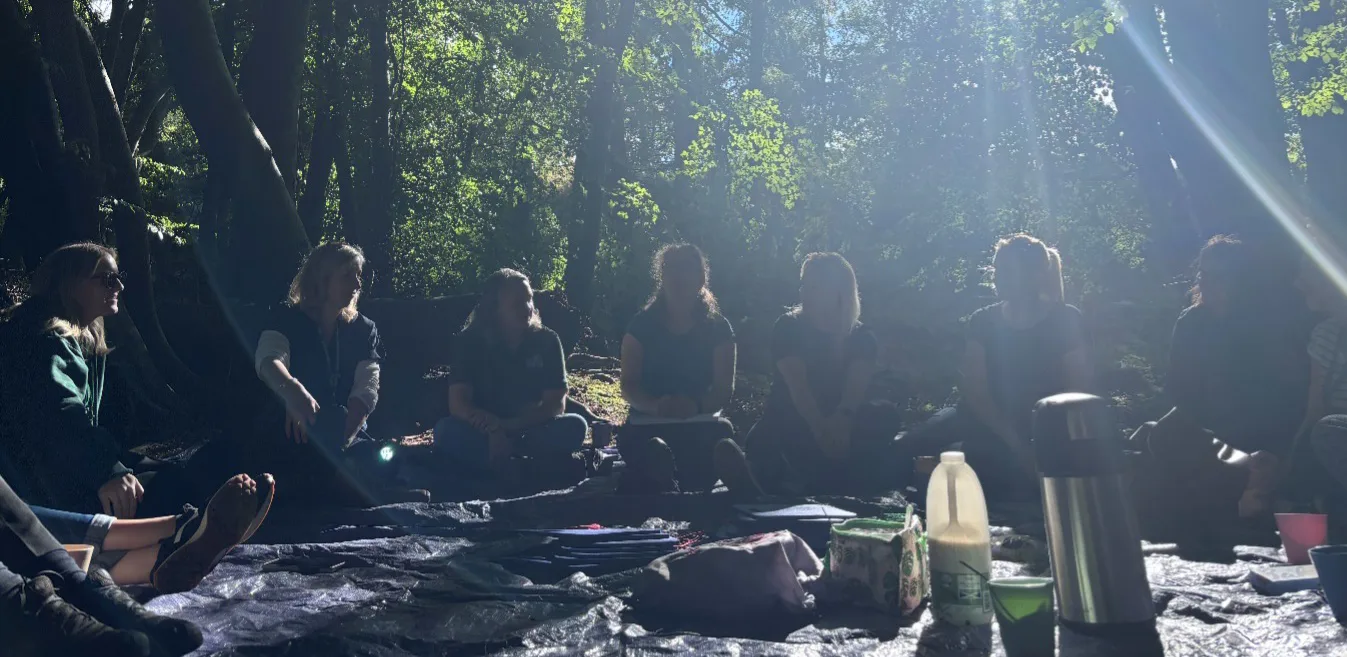
Into the wilds with children, their early years staff, and their families!
For thirteen years we’ve been running the Nurturing Nature programme – an incredibly simple idea with benefits for every relationship. Jane Mackenzie tells us more.
The majority of LtL projects work with educators rather than directly with children, but one of our longstanding projects, Nurturing Nature, works not only educators but with children and their parents too. We have a fully funded online version for you to explore! Keep reading for more details.
The programme is a really simple intervention – it’s free play, with families, in local greenspace. So how has it had such positive impacts?
Realising the Ambition, Scotland’s national practice guidance for early years, talks about the early years curriculum being made up of the spaces, experiences and interactions we provide for the children in our care. In Nurturing Nature, we harness all these elements to create memorable moments of belonging, and the opportunity to build relationships.
Spaces
In Nurturing Nature sessions we take families to amazing local spaces which are rich in opportunity for free play and child-led learning. Many of our families come from demographics who aren’t often in outdoor environments or who haven’t felt that these spaces are ‘for them’. Going as a small group can build families’ confidence to go to local greenspace more often.
Experiences
We also offer new experiences, unique to going off-site with children, such as swinging in hammocks, crossing streams, discovering new flora and fauna or playing hide and seek in the woods. Simple routines around getting ready and journeying together can hold many new experiences and opportunities for independence and interaction.
Interactions
The most critical element for this project is the interactions it encourages.
- Interactions between children and their peers, giving opportunity for role modelling, observer play and positive behaviours.
- High quality interactions between staff and children due to the high ratio and relaxed environment. These interactions allow family members to observe how staff use different methods to help young children regulate emotion in a non-confrontational and non-judgemental way.
- Interactions between families who get to know other people in their community.
- Between staff and families – the extended time with staff allows families to get to know them better and begin to build good relationships with the setting.
- Everyone benefits from the interactions with nature – this seasonally changing, multi-sensory and ‘free’ context has multiple physical and mental health benefits.
- The most important interaction is between the children and their significant attachment figure (there should be someone for each child attending). Families share that this quality time together is so precious and increasingly hard to achieve.
- Everything we do at a Nurturing Nature session is designed to create opportunity for interactions.
An early years staff member said:
We have learnt more about these families in a few short weeks than we have in all the years that we have been working with them
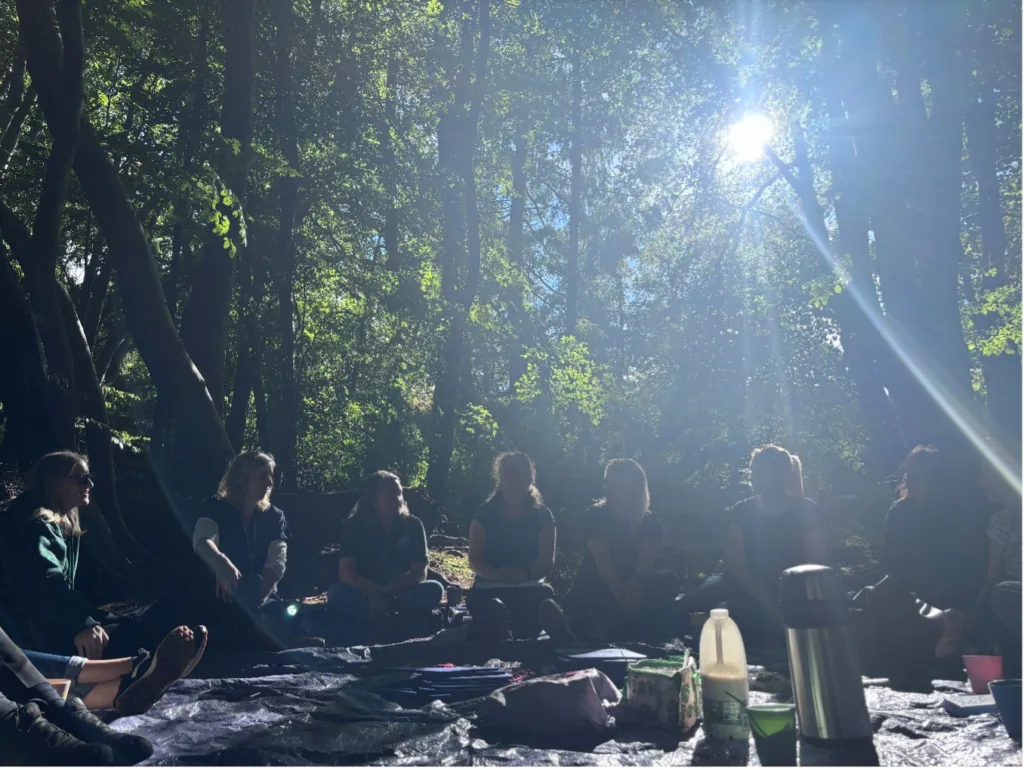
Helping create the village
Families appreciate being part of a small group. The old adage of ‘it takes a village’ really rings true with families forming lasting friendships and finding belonging in a small community. On one course, one of the dads had a new baby who arrived early, and it was wonderful to see how the rest of the group rallied round to offer support and guidance. He commented that he was glad to have had this group for consistency for his older child and also for the support he personally received. He noted that this was the first time he’d made real connections with other parents at the nursery other than just nodding at the door.
We’ve been so privileged at LtL to see the journeys that families have taken, physically and figuratively – building stamina, relationships and an appreciation for being outdoors. We’ve been sharing best practice across Scotland this year through a series of one-day workshops and have worked with over 400 early years practitioners from Largs to Lerwick! We are in our thirteenth year of continuous funding, and are currently supported by the Corra Foundation.
A nursery staff member said:
Brilliant course! Takes it back to basics on how you don’t need to be planning ridiculous activities with silly costs. Really makes you think why it’s so important to include the children’s special adults and how to do this.
We’ve been delighted to hear some successes as people put their learning into practice. You can find out more about LtL’s Nurturing Nature approach here.
You can access a fully funded online awareness course here: Nurturing Nature – Family Learning in Local Greenspace.




Related News
Parents! Nine ways to encourage your children’s school to do more outdoor learning


The social media ban for under-16s: How to redirect children from the screen to the outdoors